Gooding, David: 7 - Contending for the Faith
ID mfh_1153175740Date unavailableBefore 3.28Restored 4.64
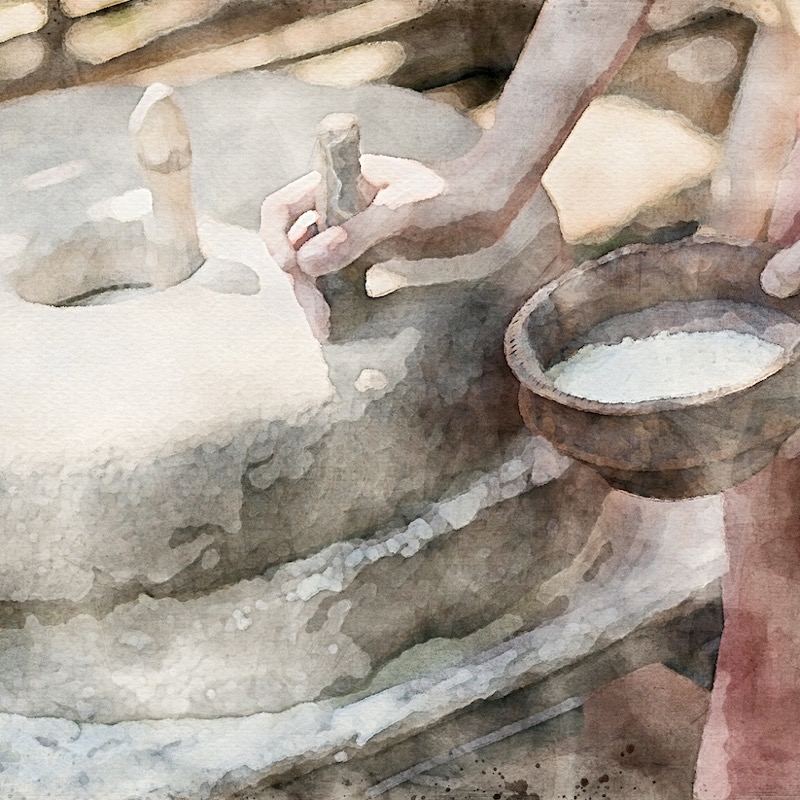
And gentlemen, we must come back now to the main road of our studies, which, as you may remember from a long time ago, is the book of Judges. We began yesterday on that topic. Now we come to study it in detail. Our first task must be to control our exposition by looking first at the actual contents of this book and how the historian has laid them out for us. So now, with our Bibles in hand, let us survey the, the territory. The book of Judges has at its beginnings what I would term two introductions. Don't quarrel with the term, call them what you will. But what I mean when I talk about the first and second introduction is this. In chapter one and verse one, you have the opening phrase, it came to pass after the death of Joshua. And it proceeds with a question that then faced the Israelites. The children of Israel asked of the Lord, saying, who shall go up for us first to fight against the Canaanites? And the Lord said, Joshua shall go up. As we saw yesterday, this refers to the second phase of the conquest of the land, where now all opposition having been broken by Joshua through his use of the united armies of Israel, now the individual tribes were to enter the second phase by peeling off, going either singly or in small groups to occupy the land that was to be assigned to them for an inheritance. And the stories that follow are largely a record of their success or failure in so doing. Then in chapter two and verse 6, we have again a reference to Joshua. This time, it says, now when Joshua had sent the people away, the children of Israel went every man unto his inheritance to possess the land. And it follows with a description, not so much of the second phase of the conquest, but of the phase that followed that. Follows on not only to the elders that were, eh, eh, who outlived Joshua, but carries the story to the third generation of people that did not know Joshua, had never taken part in the conquest of the land, but had entered into their inheritance without fighting. What happened to them? And their tendency always to compromise, instead of continuing to fight where necessary, to make compromised agreements with the Canaanites. That story goes down from chapter two verse six to chapter three verse six. Two introductions, therefore. Both of them headed by a reference to Joshua, both clearly setting out to record successive stages of Israel's experience in the land. Then at three verse seven you will get an opening phrase that is typical of the great core of the book. It runs like this: And the children of Israel did that which was evil in the sight of the Lord. That is a phrase that we shall now encounter many times. It is generally an introduction to the Lord's discipline upon his people, how that he sold them successively into the hands of various Canaanites who proceeded to oppress and to dominate the children of Israel and hold them in severe bondage, until they then cried to the Lord, and the Lord raised them up saviors in the form of judges who proceeded as military men to fight battles to deliver them, regain their freedom, and thereafter to judge them under the disciplines of God and keep them in loyalty to God, which they did generally until the judge or his successors died, when they would repeat their evil ways and decline and come once more into bondage. So here in chapter three verse seven, the children of Israel did that which was evil in the sight of the Lord, and he sold them, says verse eight, into the hand of Cushan Rishathaim, king of Me- Mesopotamia. But then he raised up a deliverer by the name of Othniel. And the land had rest forty years, and Othniel, the son of Kenaz, died, says verse eleven, Whereupon we meet our introductory phrase again, and the children of Israel again did that which was evil in the sight of the Lord. This time the Lord strengthened Eglon, king of Moab, against Israel because they had done that which was evil in the sight of the Lord. And the Moabites and the Ammonites and the Amalekites attacked and defeated Israel and gained dominion over them. And next God raised up a deliverer called Ehud, and he delivered. And verse thirty of chapter three says, so Moab was subdued that day under the hand of Israel, and the land had rest four score years. Now notice here, the historian records the work of what has come to be called a minor judge. Minor simply because the historian devotes much less space to him than the previous two deliverers. His name was Shamgar, the son of Anath. He smote the Philistines, six hundred men of them, with an ox goad. So he also saved Israel. And if you were producing a list of the judges and deliverers of Israel at this time, you would include Master Shamgar as the third in the list. And some commentators are pleased to take that way of analysis. Let me call your attention, however, to the fact that Shamgar's activity are not introduced by the general formula, and Israel did a- again that which was evil in the sight of the Lord. Notice it does not occur with Shamgar. His story is merely appended to that of Ehud by the phrase, and after him was Shamgar. That observation will be important when we come to consider the structure of this book. For after Shamgar, we revert to the formula. And the children of Israel again did that which was evil in the sight of the Lord, one when Ehud was dead. And this time the Lord raised up Deborah, the prophetess, followed by the judge Ehud, also assisted in the campaign by Jael, the wife of Heber, uh, the Kenite. The story of that captivity and deliverance from it and the celebrations that followed occupy chapters four and five. And when it is all over, we're told, chapter five, verse thirty one, and the land had rest forty years. You'll now notice the developing formula that ends the stories of the major judges. With that comes chapter six and verse one. um Here comes the formula again. And the children of Israel did that which was evil in the sight of the Lord, and the Lord delivered them into the hand of Midian seven years. Then God raised up the deliverer, Jerubbaal, otherwise known as Gideon, and his story fills chapter six and chapter seven and chapter eight, right down to verse thirty two of chapter eight. And Gideon, the son of Joash, died in a good old age and was buried in the sepulcher of Joash's father in Ophrah of the Abiezerites. And here again, we have the formula. The judge, the deliverer eventually dies. So that comes to its end. And after that, the formula once more. And it came to pass as soon as Gideon was dead that the children of Israel turned again and went a whoring after the Baalim and made Baal Berith their god. And with that brought upon themselves great trouble. The central figure whose story is now described must be treated with great care. In the developing pattern, you would expect him to be a deliverer. Indeed, he poses as such. And in, as I say, the architecture of the book, he is given the prominence and the position of a deliverer. Therein lies the intense irony of the historian. For when we come to this supposed deliverer, we shall find that he is pseudo from beginning to end. A deliverer, ostensibly, who turned himself into a veritable tyrant of the people of God, so that when he was eventually killed, the people of God heaved a great sigh of relief that they had been delivered from such a deliverer. His story comes to its end, the man concerned is Abimelech, in chapter nine, verses fifty five onwards, when the men of Israel saw that Abimelech was dead. Then in chapter ten, once more we have the feature that we found at the end of chapter three, namely some judges who are mentioned, but not introduced by the general formula that introduces the major judges. It is simply said at the beginning of chapter ten that after Abimelech there rose to save Israel Tola, the son of Puah, the son of Dodo, a man of Issachar. He judged Israel twenty three years and died and was buried in Shamir. Verse three adds a second. And after him arose Jair the Gileadite, and he judged Israel twenty and two years. He had thirty sons that rode upon thirty Assas cults, and so forth. They had thirty cities. Jair died and was buried in Carmon. You will notice that that neither of those two judges is introduced by the general formula. Hence they are called minor judges because less space is granted to them. For all I know, they may have been equally important with the so-called major judges, but then, gentlemen, I don't know because I didn't write the book of Judges. And whoever it was that wrote it is responsible for the proportions that he gives. And if we regard the, the historian who wrote Judges as being inspired of God, a former prophet indeed, then we shall have to content ourselves with the proportions that the Holy Spirit moved the historian to put before us. At verse 10, at verse ten, at verse six of chapter ten, however, we revert once more to the formula. And the children of Israel again did that which was evil in the sight of the Lord and served the Baalim. This time, the deliverer that God raised up was Jephthah, and his story fills the rest of chapter ten and chapter eleven all the way through, and chapter twelve down to verse seven. And Jephthah judged Israel six years. Then died Jephthah the Gileadite and was buried in one of the cities of Gilead. And now once more we meet this phenomenon of judges who are introduced, but without the formula. And you will notice the first time we met that phenomenon, one judge was mentioned, and the second time we met it, two judges were mentioned. And hey, presto here, for those who can count, this time three judges are mentioned. There was Ibsan of Bethlehem, verse eight. he died, verse ten. and after him, verse eleven, Elon the Zebulunite, and he died and was buried. And in verse thirteen, after him, Abdon, the son of Hillel, the Pirathonite, judged Israel, and eventually he died too. That brings us to the end of chapter twelve, and with that, as you now might it- might expect, we meet the formula. And the children of Israel again did that which was evil in the sight of the Lord, and the Lord delivered them into the hand of the Philistines forty years. And the deliverer, if you could call him a deliverer, that God raised up this time was Samson of worldwide fame. His story fills chapter thirteen and fourteen and fifteen and sixteen. You can care to notice en passant that his story is in two parts. The first half of it comes to an end at chapter fifteen verse twenty. And he judged Israel in the days of the Philistines twenty years. But at that point, we're not told he died, because the historian has another part, another half to his story, which fills chapter sixteen. Then he died very dramatically, end of chapter sixteen, and he was buried in the burying place of Manoah, his father, and once more we're told he judged Israel twenty years. Two sides to that man's story, evidently. With that, we have come to the end of the list of major judges, therefore also to the list of minor judges. But we have not reached the end of the book. Two major stories remain. First of all, we are introduced to a man of the hill country of Ephraim whose name was Micah. And Micah and his doings and what happened to him and the Levite that he had at one stage and lost, and his delightful silver gods that he kept in his god shelf in his house and so forth. What happened to him is told us in chapter seventeen and eighteen. Then finally, at the beginning of nineteen, become- begins the final story of all. In the days when there was no king in Israel, there was a certain Levite. And you'll notice how both these final stories eventually concern Levites. But these Levite went on a journey and suffered such abuse in the Israelite city of Benjamin, such abuse as surely he would not have suffered in the pagan Gentile city of Jebus. The whole thing became a national scandal. The final story is how the all-tribal assembly set about disciplining Judah for this breach of in national intertribal morality. And a long and a sorry story it is, and it brings the book of Judges to its close. The final two stories, in one sense, form a kind of a unit. They are a pair. Notice how in those stories, four times over, you have the phrase, there was no king in Israel. Chapter seventeen, verse six: in those days there was no king in Israel. Every man did that which was right in his own eyes. Chapter eighteen, verse one: In those days there was no king in Israel, every man, uh, sorry, there was no king in Israel. Chapter nineteen, the second story, verse one: It came to pass in those days when there was no king in Israel. And finally, at the end of the book, the last verse in chapter twenty one: in those days there was no king in Israel. Every man did that which was right in his own eyes. So now what you have in this book, if we were to lay ourselves out a table of contents, are two introductions, each introduced by a mention of Joshua, each referring to different phases of the occupation of the land. Then introduced by the formula, the account of seven apostasies of Israel, and how God raised up deliverers and saviors to deliver them from their bondages. Interspersed here and there in between those seven judges are the stories of another six judges, but they are not introduced by the formula and form only subsidiary elements. Finally, two major stories that form the two epilogues in the Book of Judges. So we have made out our, uh, table of contents, trying to follow the formal indication that the writer himself has given, whereby to organize and to present his material. But gentlemen, if we have made out a list of contents, we have a further task to do, either now or in the course of our study. We must ask not merely what are the main elements in the context, in the contents, but how those elements relate one to another. Forgive me, you who were present last week, because I'm now about to use the analogy I used then. If you set about describing a hand to some intelligent being that had never seen one, you could simply describe it by listing a table of contents. It's a package of blood, bones, and things, uh, and flesh. It's got a more or less square bit, and then it's got four bits sticking out at the top, one bit sticking out at the side. A very good description of a hand, except it misses the most important point. For the description of a hand is not properly given when you have merely described, uh, uh, given a table of contents of the hand. What would you know if all you knew what it was a moderately square bit at the bottom, four bits sticking out of the top, and one bit sticking out of the side. Doesn't tell you what a hand is. What you would then have to do is to explain to your hearer the function of the pieces that go up to make the table of content, and how they are functionally related to each other, so that the hand can perform its job as a hand. You would explain why one of the four bits that sticks out is on the side instead of the top, because it has a function in relation to the other four that helps the hand to grasp things, and so forth and so on, until you had described the interfunctioning of all the pieces that go up to make the hand. So when we come to a book of scripture, it is good to start with a table of contents that pays due attention to the way the author himself has arranged his material. But then, having done that, we ought to spend some time considering together the functional interrelationship of the parts that go up to make the whole. There then, for you, I have listed what we have just surveyed. The eleven— there are eleven as you'll see, the eleven major constituent parts of the Book of Judges. First, second introduction. Seven major judges, first epilogue, second epilogue. But now let's consider their relationships. Let's take the major judges for a moment. When it is very easy to see that there is more than a casual relationship between these judges. Look at the first one, his name is Othniel, and we are told explicitly what the trouble was that brought Israel into the bondage from which Master Othniel had to deliver them. They made marriages, says the historian explicitly at chapter three verse six. They took their daughters to be their wives and gave their own daughters to their sons. They intermarried, and that on this occasion was their downfall, for intermarriage with the sons and daughters of the Canaanites brought Israel eventually to worship the gods of the Canaanites. This is the thing that is particularly mentioned. Three verse 6. This was the thing then that landed Israel into bondage, an Othniel was raised up to deliver them from bondage. Mark the man's qualifications, gentlemen. Because an earlier story in chapter one has explained a little of Othniel's history. And if we haven't forgotten it by the time we arrive in chapter three, the memory of it could be useful. The story in chapter one is concerned to tell us how Othniel got his wife, and to explain that it was for love of Othniel and with the goal of obtain, uh, of Aksar, sorry, and uh, for the goal, with the goal of obtaining Aksar, Caleb's daughter, as his wife, that Othniel went and stormed the city, drove out the Canaanites, and received that city as his possession, but along with that city, Caleb gave him his daughter Aksar to wife. You perceive how Axar proved the spur that led Othniel to his great victory. And not only that, but when he had, uh, when he had, um, achieved his victory and received the city, then Axar acted as his spur to gain from daddy, uh, Caleb, uh, an extra bit of inheritance. It was given us an inheritance here in the Negev, she says, it's rather sandy and dry, papa, you are such a loving papa. Uh, wouldn't you consider giving us a bit more inheritance? And giving in to the charms of his daughter, he gave her the upper and nether springs with which to irrigate his inheritance. Acts are the secret and the spur to Othniel's success. And if the trouble was that Israel had been too attracted to the girls of the Canaanites and had intermarried with them and gone down the slippery slope into idolatry as a result. What more qualified man would you ever have picked upon if you had been God than Othniel? Who stood the direct opposite of that tendency. Oh, gentlemen, gentlemen, hear the lesson that the Spirit of God is preaching you. Othniel, raised up of God to deliver his people when they fell into bondage because of their love of Canaanite women. Asniel qualified, not because he was an old Puritan that never got married, like some folks that are around, but, uh, uh, you'll see, uh, Asniel, whose love was directed in the right direction, you'll see, was attracted to this sterling young lady, Caleb's daughter. And love of the right thing helped him to drive out love of the wrong. Well, that's simple. I mustn't, I mustn't at this stage sermonize, gentlemen. Would you mind looking at the last judge? Name was Samson. He delivered Israel, or he began to, or at least the Lord began to, to take the phrase of scripture, to deliver Israel in the days of Samson. Samson did some mighty works, tremendous spiritual fireworks there were when he got going. Foxes with burning brands tied to their tail, running through the enemy's corn. It looked very impressive at the nighttime. What a show it was. What good it did, I don't know. Well, it was a show anyway. When he died, Israel were still in bondage to the Philistines. He was a deliverer and a man of faith. I must be careful what I say. I shall have to meet him in glory one day, and the Holy Spirit, summing up his life in Hebrews eleven, tells us he was a man of faith. Yet, and yet, and yet, if you ask why, by the time he died, Israel were not delivered from bondage, the answer, gentlemen, is you'll never deliver the people of God from the enemy if you yourself fall in love with the enemy's daughters. And now you notice that Samson the deliverer, if you please, was guilty of the very sins from which the people of God had to be delivered in the time of the first deliverer. Something's gone wrong, has it not? When the deliverer amongst God's people, I repeat, is guilty of the very sins from which in an earlier day the people of God had to be delivered. You say, can leadership go to the bed like that? I'm afraid it can, gentlemen. But we at the moment, I was not supposed to be sermonizing, I'm merely pointing out how these stories are interrelated functionally. You might care to take the second story. The enemy was Moab, the deliverer was Ehud. Ehud did a number of things. Interesting for our purposes at the moment are two things that he did. He came into the king as though he were a kind of a diplomat. I have a message from the Lord to you, he said. The message turned out to be a dagger, but that's how it was. A message from the Lord. And then, the king being slain, Ehud summoned the troops, and they took the fords of Jordan. And as the Moabites came over, they slaughtered them. Look, if you care, to the second last judge, Jephthah. He was a genuine diplomat. And the early part of his story is the record of a number of embassies that were, uh, sent by Jephthah in international diplomacy to argue the case over the disputed territory east of Jordan with the diplomats on the other side, and in the king of An- Ammon in particular. And long, long space is given in the record to these diplomatic exchanges. When diplomacy failed, and only when diplomacy failed, did Jephthah go to war, and he delivered, uh, the na- the people and retained the territory. But then there arose a dispute with the Ephraimites and others. Jephthah, like Ehud, took the force and slaughtered a good many who came over. Took the fords of Jordan. But there's a different gentleman. Jephthah too was a man of faith. Let me be careful of my words. But whereas when Ehud took the fords and slaughtered all who came over, those whom he slaughtered were the enemies of the Lord's people. When Jephthah took the force and slew those who came over, the people he slew were his fellow nationals, his national brothers. Say Shibboleth, he said. And these poor fellows, they meant to say Shibboleth. They couldn't frame it. Irishmen, I should think, is the same from Englishmen or something, but they couldn't pronounce the word, and they said sibboleth. And when they couldn't say the word exactly as Jephthah said it himself, he slaughtered them. They meant the same thing, gentlemen. It was the same word. It was simply they couldn't pronounce it quite the same way as, uh, Jethro pronounced it, and he slaughtered them. As though they were the enemies of God, when they were his fellow brethren. Things have come to a sorry pass, haven't they, in Israel? When the man d- raised up of God to deliver his fellow nationals... treats his fellow nationals as though they were enemies and can't distinguish between the real enemy and his brethren. That's a sorry story, but we who have known the history of Christendom will not be inclined to throw two big stones at the memory of these ancients who made such ghastly mistakes. Or take the story of the third captivity and the way it was finally brought to its end. Deliverance here was accomplished by God through a triumvirate, if that's the right word to use, of two women and one man. Deborah, Barak, and Jael. Let's notice how it all ended. The Lord delivered Sisera, as Deborah prophesied he would, into the hands of a woman. As Jael took a tent peg and drove it through the brain of the commander in chief, Sisera. Look at the story of Abimelech. The distress of Israel came to an end on that occasion, by a woman who smashed the skull of the army commander. When the aforesaid army commander came near the walls, this good woman who was tired of his nonsense, heaved up a bit of the millstone with which he was preparing the family lunch, heaved it over the wall, and it lighted upon the head of the aforesaid commander, crushed his skull and put an end to his nonsense. Only, gentlemen, there's a difference in the skulls. For the first skull pierced by Jael was the skull of the commander of the enemy forces. The second skull was the skull of a man who masqueraded as a deliverer of Israel. It's come to something, hasn't it, when you've got to smash the skull of your deliverer to get peace. That's had to be done sometimes. You will have noticed, therefore, that there is a certain pattern developing, surely, in this book. See the turning point in the history of Gideon, who is introduced to us at the beginning with his glorious and courageous stand against idolatry, as he heaved over the old idol outside his father's house, doing it by night because he hadn't the courage to do it by day, but he did it anyway. And the resultant strife that broke out over the incident earned him the nickname of Yerubbaal. Then there is the story of his fight against the enemy, the hordes of Midian, and the tremendous victory he wrought with a remarkable, uh, tiny army. Then, ah, there's a story of his fight against his fellow nationals as he broke down their tower and harrowed them with the jagged edge of thorns. Finally, there is the story of the lapse into idolatry. He requested the golden earrings of the Midianites, their enemies. They made them into an ephod. The same became a snare to Israel as they began to worship this relic of Gideon's victory. We'll perceive that there is a kind of a watershed halfway through the story of Gideon. Now, gentlemen, this is not a pattern that I myself have imposed upon the book of J- Judges. I didn't write these things. Well, somebody wrote the paragraph, I mean. I didn't write the book of Judges, and what we have on the sheet before you is simply virtually the words of scripture itself. But the pattern that you have observed, uh, shows what the writer means by his own stated thesis. In chapter two, verses eighteen and nineteen, we read as follows: And when the Lord raised them up judges, then the Lord was with the judge and saved them out of the hand of their enemies all the days of the judge. For it repented the Lord because of their groaning, by reason of them that oppressed them and vexed them. So the Lord delivered his people. But it came to pass, when the judge was dead, that they turned back and dealt more corruptly than their fathers, in following other gods to serve them and to bow down unto them. This is the writer summing up in advance what is going to be the story of his book. The story, he says, is going to be cyclical. It will be that Israel's sin, the Lord delivers them into the hands of their enemy, the enemy oppresses them, and Israel eventually cry in their misery to God. God raise up a judge, he delivers them, he judges them, and all goes well until the judge dies, and then the circle is repeated. And once more the Israelites go, uh, uh, into idolatry, and the Lord sells them into the hands of their enemies, and then they cry to the Lord, and once more the Lord delivers them. The story, he warns us, is going to be cyclical. Not one great revival that lasts for the rest of time, but a series of declinings, bondages, then deliverance and revivals, and then the circle repeated. Ah, but then more. It is not only that it will prove cyclical. With each departure, with each apostasy, with each oppression and bondage, the circle will go worse than it was before. Children of Israel return and do more wickedly than their fathers did. With each cycle, there is a worsening of the situation. If that is true of Israel's sinning that gets them into the bondage, now you will see, sadly enough, it is true with the deliverers. The early deliverers, nothing is said against them. But with Gideon, that notable and perhaps the greatest of all deliverers, there comes a turning point in his life when he begins to go downhill. And with that, though there are deliverances and revivals thereafter, each judge, each deliverer, if you please, is marked by a sorry decline in standard. Till you come to the last judge, guilty of the very sins himself, from which Israel had to be delivered in earlier days. Deliverer, doing many things, never actually managing to deliver the people of God who were still in bondage to the enemy when he died, as they were when he was born. The very structure of the book, gentlemen, is significant. We're not playing crossword puzzles with God's word. The structure is significant. And when we come to it, we shall see that the two introductions are balanced at the end in their subject matter by the two epilogues. But more of that on another occasion. Let us give ourselves rest from the weariness of much study.