Gooding, David: 16 - Contending for the Faith
ID mfh_1153175437Date unavailableBefore 3.30Restored 4.54
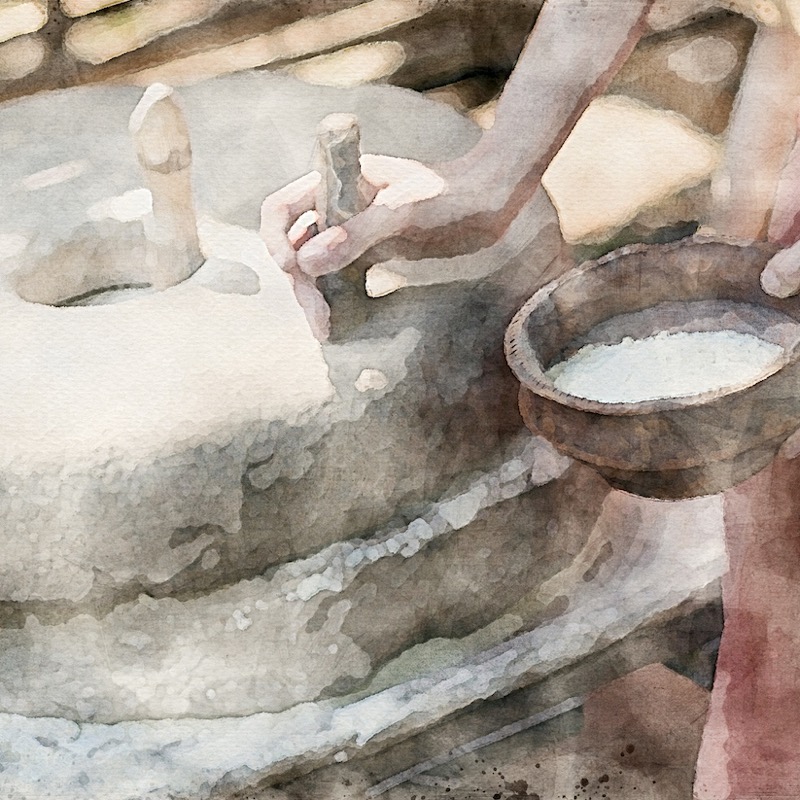
We come now to the fifth major episode in the book of Judges, and I have very little to say about it, and perhaps that is for the good. It is one of the saddest episodes in the whole book. It centers around a certain Abimelech, and you will notice, first of all, the irony that the historian uses in the very construction and the proportioning of this part of his book. By this amount of space allotted to Abimelech, at first sight, Abimelech stands shoulder by shoulder with the great deliverer of Israel, with his father Gideon, who came before him, and with Jephthah, who followed after him. But as we read the story, we eventually become disabused of our first impression. Though in position, in the structure, in the book, and in the proportion of his story, he seems at first to be a deliverer. The irony is that the man who posed to be a deliverer is the very tyrant from whom the people of God have to be delivered. Virtual Old Testament diotrephes, if ever there was one, posing as a deliverer and leader of the people of God, actually setting himself up as a tyrant who, when he comes to his end, causes by that very end the people of God to heave a grateful sigh of relief and pray God that never such another deliverer ever comes their way. To put the whole thing in its context, we should first of all consider two things. One, the concept of covenant, and two, the recent history of Shechem. Let us go back to the idea of covenant as we find it in the Ark of the Covenant of the Lord. The old covenant which God made between himself and his people Israel. It was, as you see, as soon as you inspect it, an instrument of government. The tables of the covenant were put in the ark and covered with the, the propitiatory, the mercy seat, which ark was thought of in Israelite symbolism as, if not the throne of God, then his footstool. For God, they believe, presents himself sat enthroned above or between the cherubim. The ark beneath, therefore, was his throne and footstool. Suitably, therefore, the covenant tables were in that throne. They marked the law given by God that formed the basis of the covenant that was the instrument of God's government to his people. In recent years, this last forty or fifty years, scholars have pointed to similarities between the covenants that some of the early Canaanite emperors made with their vassal kings, and the covenant form of the Decalogue, such as we have it in the Old Testament. Nowadays, the idea has fallen out of favor with some, but it seems to me that there is still helpful, uh, help- there is still, uh, interesting matter in it, and it is still helpful to make the comparison. When a great Canaan- Canaanite emperor such as Suppiluliumu wished to control the vassal kings that were under his authority, he would draw up a vassal treaty, a kind of a covenant, and it would follow a certain form. It would begin by declaring the identity of the great emperor, I am Suppiluliumu. It would proceed to declare what the great emperor had done for the vassal kings and his subjects, generally conquered them without other such benefits that he had conferred upon them. Then it would forbid that the vassal king should make any other covenant with any other emperor or king or prince. It would then proceed to a list of commands and the lists of prohibitions. It would call heaven, uh, call the gods to witness that the covenant had been made. It would pronounce blessing on the keeping of the covenant and mighty great threats and curses if the covenant were broken. It would require that the covenant documents be stored in a safe place, and that from time to time they would be taken out by the vassal king and read in the hearing of his people to remind them of their duty to the great emperor. And when such treaty covenants were found between Canaanite emperors and their vassal kings, scholars were not slow to point the similarity in form between some of these covenants and the form of the ancient covenant God made with Israel. The covenant document of the Ten words opens with the declaration of the identity of the sovereign Lord. I am the Lord your God. There follows a description of the benefits he has conferred upon Israel, who brought you up out of the house of bondage. Next come the prohibition against making images of other gods or making any covenant with them either. After that come positive commands and negative prohibitions. If you look further into books of Deuteronomy, for instance, or Joshua, you will find the the blessings pronounced upon the heads of those who keep the terms of the covenant, and curses pronounced on the heads of those who break it. God calls not the other gods to bear witness, for God is no idolatry by definition. God calls heaven and earth to witness that he has made a covenant with his people. He requires that the covenant documents the two tables of the law bestowed for safety in the ark in the tabernacle. And as you see, the book of Deuteronomy is one instance where the leader of the nation at that time, Moses, took the covenant out after forty years across the wilderness and read it in the ears of the people that the new generation might have God's covenant expounded to them in all its significance. And it becomes ever more clear, does it not, that the Old Covenant was an instrument of government by the means of which God the Redeemer, uh, purposed to govern his people Israel. God was their king. As we have just heard Gideon saying, I will not be king over you while God your himself is your king. Having thought about the significance of the concept of covenant, let us now remind ourselves of that august occasion that fell at the end of the life of Joshua, when just before his death he summoned together the nation of Israel to that honored place, Shechem, rich with history, going back to the times of the patriarchs, long since in pagan Gentile hands, now at this juncture recovered apparently by the Israelites. And Joshua, as some of us were thinking last week, called the people there to Shechem, with all its hallowed memories of the patriarchs, to remind them again of the nation's duty to serve, in the sense of be the loyal subjects of God. He put before them the difficulties of serving the Lord, for the Lord is a jealous God and will not lightly countenance Israel if she apostatizes and goes and serves other gods and other masters and other lords and other deities. When at last the people protest their determination to serve the Lord and the Lord only, then we read Joshua made a covenant with the people that day, verse 25 of Joshua twenty four. He made a covenant with the people that day and set them a statute and an ordinance in Shechem. Joshua wrote these words in the book of the law of God, and he took a great stone and set it up there under the oak that was by the sanctuary of the Lord. Joshua said unto all the people, Behold, this stone shall be a witness against us, for it hath heard all the words of the Lord which he spake unto us. It shall be therefore a witness against you, lest you deny your God. So now another covenant made, as the people voluntarily of their own free will make a solemn covenant that they will be the Lord's and serve the Lord and serve him only. And the stone is set to be a memorial for all generations here in Shechem of Israel's determination to show subject loyally, loyalty to their God, their king. The incident, the whole episode that we are now to consider turns on these three things. It is to be centered in Shechem of hallowed memory. It is concerned with the matter of kingship. It will bring to our mind the concept of covenant. The matter then concerns Abimelech. And the nub of the story, to cut a long story short, is that Abimelech managed to persuade the men of Shechem to slaughter all the sons of Gideon, and then to make Abimelech king. To see the enormity of the thing, let us just briefly remember again how Gideon his father, had been asked to be king, to set up a royal dynasty by the people in their gratitude for the deliverance that Gideon had achieved for them. And Gideon had refused to be king, saying that God and God only was the nation's king. To see the enormity of the thing, pray remember Shechem and the stone that stood. It may well have still been standing in this century, that recalled Israel's determination that God and God alone should be king. Recall thirdly, the significance of the tent of meeting that was set up at Shiloh, where God's throne was, that was to be the uniting center for all God's people. Then perceive that if Abimelech's attempt to be king had succeeded for any longer time, it would have inevitably split the nation from stem to stern. However did things come to such a pass? By what specious logic or other devices did Abimelech manage to persuade the men of Shechem to make him king. We noticed at the end of our afternoon session a certain ambiguity in the history. While Gideon said, I will not be your king, we are told that he had a concubine in Shechem. He himself, of course, lived in Abiezer, but he had this outlying concubine in Shechem. Of her he had a son, and he called the name of that son Abimelech. My father is king. I wonder if it was there that the boy first got his idea that that would, this would be a good thing to be. I wonder whether it was his mother that fostered the idea in the infant and teenager's head. Who knows? But eventually he went, says chapter nine and verse one, Abimelech the son of Jerubbaal went to Shechem unto his mother's brethren and spake with them and with all the family of the house of his mother's father, saying, Speak, I pray you, in the ears of all the men of Shechem, whether it is better for you that all the sons of Jerubbaal, which are threescore and ten persons, rule over you, or that one rule over you. Remember also that I am your bone and your flesh. So the first major step is Abimelech's crafty method of putting before the men of Shechem a false antithesis. A false choice. He asked them to decide whether it was better for all the sons, seventy men, to rule over them, or better that one man ruled over them. Pondering that, they decided it was better to have one man rule over you, which I suppose on the whole it is. The antithesis was false. Gentlemen, if somebody grabs you in the middle of the night, pulls you out of bed, and while you're still rubbing the sleep out of your eyes, puts before you a decision and says, now, which would you prefer? That you die by hanging, or that you should be killed by shooting? In those moments before you really wake up, you might say, well, now, given the choice, I suppose, well, perhaps shooting would be the preferable thing, uh, uh, because hanging's a bit messy, isn't it? Uh, uh, you tend to get throttled that way. So shoot me. But of course, when you've gained fully awake, you would say half a minute, uh, we haven't discussed the prior question, uh, is this a choice I've got to make? Who said I got to die anyway? And of course, you don't have to die. So the choice was a silly choice, a false antithesis. And when Abimelech said, choose whether it's better for seventy men to rule over you or one, he was putting before them a false antithesis. They needed neither one nor the other. It was God who should rule over them. And the seventy men of Gideon's sons weren't proposing to rule over them anyway. They were going to leave that to God to do. And it was a false choice that Abimelech put before the men of Shechem. The second lever that he used to move them to his side was family loyalty. You see, it was to the men of Shechem he went, and he said, it is bet- is it better for you that all Jerubbaal's sons rule over you, or just one? And then he added, you see, remember, I am bone of your bo- I am your bone and your flesh. You see, the other seventy sons of Gideon had been born by different women in different places. Abimelech was the son of Gideon by the woman who lived in Shechem. And she, of course, was related to some of the people in Shechem. And when, without thinking, the men of Shechem were faced with this problem, this question, this choice they had to make, one item that turned the scales in favor of Abimelech was that he belonged to their family circle, their clan, their town, as distinct from the other seventy. So the matter was decided now not in the interests of the nation as a whole, but in the sectarian interest of one particular city, and with the interests of one particular family specially in mind. Gentlemen. Gentlemen, we needn't allegorize the thing. It can happen, even in Christian churches, that matters can be decided, not on the ground of what is in the interest of the people of God at large, but what is in the interest of a small sect, or indeed within a church in the interests of family and blood. One family in a church fighting for supremacy over another family. The irony of the thing was then that in the third place Abimelech went, see verse four, and gave the, eh, eh, eh, they gave him threescore and ten pieces of silver out of the house of Baal Berit, Lord of the covenant. But alas, this wasn't out of the house of the Lord. This covenant was not with Yahweh, Jehovah. This was the covenant with an old pagan deity, Baal, Baal of Shechem, the old pagan deity. And they took the money out of that pagan religious, uh, co- the religious coffers and gave it for the work of establishing a Bimelek king over the Israelite citizenry. It was ironic, wasn't it? You'll notice how the historian here keeps referring to Gideon by his other name, Jerub Baal. The man who in his day had stood diametrically opposed to the worship of Baal and overthrown his altar and brought on himself the criticisms of his fellow townspeople, never mind for that incident he got called Yerub Baal. How could it be that the very next generation, his own son, went over to use money from the house of Baal, Berit, covenant bail in a pagan temple in Shechem. Oh, gentlemen, what confusion it is. How soon did Christendom adopt not biblical methods of government and leadership, but methods of government and concepts of government that they had taken from the pagan world, and eventually built up great hierarchies of career structures, modeled on the imperial system of ancient pagan Rome. What a sad business that is, when worldly pagan concepts and resources are brought in to establish unauthorized government in the church. So then that is what has happened. That is what happened. They made him king. And because now his position seemed to him to be insecure, so long as Jerubbaal's other seventy sons were at large, or he supposed that they would all be driven by the same godless, unholy ambition as himself, he took the money and gave it to the men of Shechem so that they should slaughter all Gideon's sons in cold blood. And they showed no gratitude to the very man, Gideon, who had achieved their liberty. We're not supposed to be traditionalists, gentlemen, but to examine all things according to God's word. But God save us if we can have no respect and gratitude for the men who in times past delivered us from servitudes and pointed the way to liberty. God save us if repudiating the clear teaching of scripture that they brought us, we go and adopt worldly standards and enmesh ourselves once more in bondage. When one of Jerubbaal's sons by the name of Jotham escaped the general massacre, he then made his protest. He went and stood upon the top of a, of Mount Gerizim, and lifted up his voice and cried and said unto them, Hearken unto me, you men of Shechem, that God may hearken unto you. And he preached the only fable that I am aware of in the whole of Holy Scripture. A fable, gentlemen, this is a fable, as you see. In fables, you have animals and trees and the wind and the sun and the moon all doing things that they couldn't possibly do in real life. So here you have trees talking together and speaking and arguing, and as anybody knows, trees can't talk and speak and argue one among another. This thing is a fable, therefore. But it's a fable that, uh, conveys exceedingly powerful truth. It's a fable about what true leadership is. And I have a feeling that Larry Price ought to be here now, uh, to be preaching this rather than me, for as you heard him at the conference, he was talking about these things. What is the true concept of leadership, or if you will have it, of kingship. Said Jotham, the trees went forth on a time to anoint a king over themselves, and they said unto the olive tree, reign thou over us. Oh, said the olive tree as he treated them with scorn. Nonsense, gentlemen, I got bigger things to do than being a king and reigning. Well, how can you have anything bigger to do than be a king? I mean, isn't being a king the tip-top position that anybody could ever have? No, said the olive tree. Should I leave my fatness wherewith by me they honor God and man and go, and listen to the sarcasm of the, uh, olive tree, to wave to and fro over the trees. What an empty gesture. I didn't know olive trees could be so sarcastic, but there you are. Faced with the absurd idea of being a king, uh, you'll see, when he had such a marvelous ministry to perform for God and man, the olive tree despised the whole proposition, preferring to get on with its God-given work of bringing forth fatness, you'll see, to, um, honor God and man. Why the oil that was used in rituals for God. The oil that was burned in the lampstand was olive oil. Oil that was used to anoint people was basic olive oil. What a glorious position and ministry to be an olive tree that produces oil that, uh, is used to honor God and to honor your fellow man. Wouldn't give it up for all the tin china, said the olive tree, mixing his metaphors. Ah, Dulce, ah, ah, ah, you can be king if you want to, I not. Good old olive tree. So the tree said to the fig tree, come thou and reign over us. I never heard such absurdities, said the fig tree. Should I leave my sweetness and my good fruit? That people enjoy, that nourishes them, that gives them delight, that feeds them, that builds them up and makes them strong. Should I leave my sweetness and fruit and go and wave over the, over the trees and began nonsense, childish nonsense? Oh. And the tree said unto the vine, Come thou and reign over us. And the vine said unto them, Should I leave my wine which cheareth God and man, and go to wave to and fro over the tree? The reply, you see, is similar. The vine had its own ministry. It delighted in it. Wine that gladdened the heart of man in his sorrows and made glad the heart of God as well. It was used in offerings to the Lord upon the altar. Beautiful, healthy ministries that serve both man and God, and minister to them and serve them. That was the ideal that these three trees aimed at. Whence comes this ungodly urge to be kings and rule when we could serve? Our blessed Lord, as we reminded at the conference, our blessed Lord pointed out to his apostles how grievously mistaken was their concept of ruling. As they had been arguing among themselves and getting upset as to who should be the greatest and who would sit on the right hand and on the left in his kingdom, he had to point out to them how seriously mistaken their view was. Here came Mrs. Zebedee with her two boys. Lord, she said, um, uh, would you grant that my two sons, all they're such marvelous boys, should sit one on thy right hand and the other on thy left in thy kingdom? Said the Lord Jesus. You don't know what you ask, do you? Can you be baptized with the baptism that I'm baptized with? Can you drink of the cup that I drink of? And they said, we can, Lord, we don't care what it costs. We're prepared to pay any price to get on those two seats and be the chief rulers after you. We go through hell and high water, Lord, to get there. We must be the first in the kingdom under you. Well, said our Lord, actually, gentlemen, it's not mine to give anyway. You asked the wrong person. Those seats are reserved for those for whom they are prepared. But would you happen to know what being first means, gentlemen? Have you any concept of what being, being the, the chiefest of all is. What it would mean if you got those two seats. The biggest, the chiefest is the one who serves the most. The Gentile idea that being the big boy is the one who sits on his big throne, and when he sends out his letter to you, because he's the head of the civil service, he signs it in England, your obedient servant. Don't take him too literally, will you? The man has a couple of Rolls Royces and 150,000 a year. Don't you take him too literally. He isn't your obedient servant. The amazing thing is that the Lord of the universe will be your servant forever. And a vivid illustration is given. For after that incident, our Lord entered and passed through Jericho, and there was a flea-bitten old beggar, uh, sightless and blind, cried out, "Thou son of David, have mercy on me." And the crowd told him to keep quiet, "Son of David, heir to the throne of David, had more important things to do than look after a flea-bitten beggar. He's going up to Jerusalem, who knows ought to have dinner with Pilate and to be interviewed in public and things like that. He haven't got any time to see after flea-bitten beggars. But the Lord Jesus stopped and bade the man be called, said, what would you like me to do? The man said, that I might receive my sight. And the Lord gave him his sight. I wonder what he was expecting to see. Well, he was expecting to see the great son of David, wasn't he? Heir to the throne. But he saw no crown, and he saw no purple robe, and he saw no jewels, and he saw no throne. He saw a travel-stained, weary servant of men on his way to Jerusalem to give his life a ransom for all. And our blessed Lord, on one occasion, in encouragement of his apostles to work and sacrifice for him. When the Son of Man comes, he shall sit you at table, and he shall gird himself and serve you. I think sometimes heaven is going to be an embarrassing place. Don't you? If you could go home after this conference, sit down in your large armchair, press the bell, and in came a waiter and took off your lordly shoes and put on a pair of comfortable slippers, made ready your dinner, put up the car, and generally waited on you hand and foot, you'd feel as somebody, wouldn't you? Suppose when you pressed the bell, the servant came in, all dressed to serve, and you looked again and saw it was the Lord. What would you do if he tried to wait on table while you sat there and ate? That is what he says he's going to do in his kingdom. I don't know how you'll stick it, gentlemen. To see the Lord of glory sit you at a table and come and serve you as a waiter. And not only you, but all the vast millions. None shall be greater than Christ. He's the one who serves the most. You say, I don't get this concept. How can the one who serves be greater than the ones that are served? Well, gentlemen. Here's a farmyard and here's a old pen full of pigs. And here comes the farmer with the bucket and the swill for to feed the pigs, and they're shouting their heads off like pigs will, demanding more and more food, and the farmer serves the pigs, and they don't serve anybody. And which is the bigger? The pigs who sit at meat, or the kingdom of come and the Lord serves you, don't get uppish ideas, will you? It's not because you're all that important. It's him that's the big one. Ah, but this thought of being a king appeals to some, doesn't it? It appeals to certain natures. Listen to them. Then all the trees came to the bramble. Come thou and reign over us. And the bramble said, yes, I'm especially fitted for that type. That, that's the gift that I've been given. If in truth you anoint me king over you, then come and put your trust in my shadow, said the bramble. And if not, let fire come out of the bramble and devour the cedars of Lebanon. Did you ever hear anything so grotesque in all your life? This creeping old bramble, fit only to be burned itself, and he's going to lord it over the cedars of Lebanon, if you please, these gigantic, beautiful trees. And if they don't bow down and do his will, he's authorized to have fire come out of him and destroy the very cedars of Lebanon. There are men and minds who never contributed anything to the feeding or blessing or honoring of the church. They would down an Apostle Paul, for that they might rule. If anybody objected to their rule, let them be excommunicated. It was early on a man like that. His name was Diotrephes. If you didn't bow to him in the assembly, he put you out. And he wouldn't even listen to the Apostle John. What a bramble he was. All brambles can actually do is to scratch you. The fable was very pointed, wasn't it? Now therefore he said, if you have dealt truly and uprightly in that you have made Abimelech king and have dealt well with Jerubbaal and his house and have done unto him according to the deserving of his hand, why then, if you have dealt true and rightly, uprightly with Jerubbaal and with his house this day, then rejoice you in Abimelech and let him also rejoice in you. But if not, let fire come out from Abimelech and devour the men of Shechem and the house of Millo. And let fire come out from the men of Shechem and from the house of Millo and devour Abimelech. And Jotham ran away and fled and went to Be'er and dwelt there for fear of Abimelech, his brother. Famous curse of Jotham. Gentlemen, if you've done well, well, rejoice in him, but if not, let fire come out of Abimelech and destroy you, and let fire come out from you and destroy Abimelech. And that is what happened. For in the end, they turned one against the other in their ungodly pursuit of being the boss and destroyed each other. How did it happen? First, by God's providential overruling. We read in verse twenty three, and God sent an evil spirit between Abimelech and the men of Shechem, and the men of Shechem dealt treacherously with Abimelech. That statement is not meant to imply that God is the author of evil or connives at evil. It's an ancient way of pointing out God's providential ruling. If men will choose an evil course and do evil things to appoint a king like that and slaughter innocent men in the process, God will, in his providence, allow an evil spirit to work in their minds so that they start being treacherous to each other, and they will reap the consequences of their evil deeds. But it was a painful process. First of all, the men of Shechem dealing treacherously, they robbed all the caravans that came in, presumably to diminish Abimelech's income. One of the things Abimelech would enjoy by being king was the revenues that came from the trading caravans that passed that way. And the men of Shechem put scouts on the top of the mountains to watch so that Abimelech didn't, uh, catch them at the job and sought to undermine him by robbing the caravans and avoiding the taxis. That didn't do much, and somebody split on them anyway, and it was told Abimelech. Then there rose up a certain Gaal, the son of Ebed, and came with his brethren and went over to Shechem, and the men of Shechem put their trust in him. So now you have a rival for the kingship. And on what, uh, grounds does Ebed and, uh, Gaal, the son of Ebed, uh, make his proposals? Well, not, as you see, gentlemen, on the ground that, look, you have been horribly mistaken. You never ought to have made anybody king when the Lord was your king. Now let's return to the scriptural method and the God-ordained method of leaving God to be king. No, no, no. It wasn't that he objected to what Abimelech was doing. What he objected to, that Abimelech was the wrong man to do it. Gael himself ought to be doing it. That's uncomfortably true to life, gentlemen. Sometimes when you get factions, even in a Christian church, and they object to what one man is doing simply because, not for what he's doing, because they feel he's the wrong man that should be doing it, the other party should be allowed to do it. That was Gael the son of Ebed. And he appealed openly on tribal terms. Who is Abimelech and who is Shechem, he said, that we should serve him? Is he not the son of Jerubbaal and Zabul his officer? Serve you the men of Hamor, the father of Shechem, but why should we serve Abimelech? Hamor, of course, was a very ancient family name in Shechem. You'll read it in the book of Genesis when Jacob and his sons came to Shechem. There was a Hamor then. It was a name of a long established family in Shechem, and not necessarily an Israelite name at all. But now, eh, eh, you'll see Gael openly and unblushingly appeals to family interests and sectarian interest, decided on tribal terms, says he. I'm a son of the ancient family Hamor here. Pagan old family it was. Abimelech is son of Jerubbaal, who originally came from Abi Ezra. The difference, if there were a difference between the two, was this, that Gael was prepared to settle to be king simply of Shechem. That would have divided the Israelites, the men of Shechem, from the rest of the nation. Abimelech was more ambitious. He was trying to be king of Shechem, but he wanted at the same time to be commander in chief of the armies of Israel. They wanted both. And so the sorry and ungodly strife goes on, with Zabul engaging in his treacherous diplomacy and egging Gael on, and all the while deceiving him, until, of course, Abimelech comes and destroys the lot of them. And with it, Shechem is destroyed. And then the stronghold of Shechem is destroyed. Think of it, my brethren, from the time when Joshua stood there in that solemn assembly, having captured the place, and brought Israel to make a covenant to serve the Lord. And now this ungodly strife as to who shall be king has destroyed the people of Shechem, the city of Shechem, and the tower of Shechem. And not content with that, now Abimelech pursues his course and tries to get other Israelite cities to back him, and if they don't, he destroys them as well. And you'll see he went up to Mount Zalmon, he and all the people that were with him. They cut down boughs of trees, they heaped them against the city, and they burned the city with fire. All for the purpose of extending Abimelech's empire. It was, of course, the fulfillment of Jotham's curse. It was, of course, God's providential government. Thus, of course, verse fifty six says, God requited the wickedness of Abimelech, of Abimelech, which he did unto his father in slaying his seventy brethren, and all the wickedness of the men of Shechem did God requite upon their heads, and upon them came the curse of Jotham the son of Jerubbaal. In the end, it was self-destructive. Uh, listen to the story of how Abimelech himself perished. He destroyed the men of Shechem. He destroyed their city, he destroyed their tower. He came to attack the city of Thebes. And there was a mother in Israel, getting on with the job of feeding her family, just like, uh, Gideon once upon a time had given himself to the task of feeding his family. She was, um, grinding the meal, apparently, when Abimelech came near the wall, commanding the operations that would have destroyed the city because they hadn't given in to Abimelech and submitted themselves to his rule and become part of his little empire. This sane woman, wholesome, getting on with the job of feeding the family, like the olive tree and the vine and the victory. Whose job it was to maintain family life, even if only in a humble way, her own family, but it was positive, feeding God's people and building them up. She wasn't going to stand by and see God's people destroyed as a result of this godless political strife, everybody wanting to be king. He got hold of the upper stone of the mill, threw it over the wall, precisely on Abimelech's head, and that put an end to his nonsense forever. How do you feel, brethren? I feel like saying hurrah. I mustn't give you permission to fling millstones on anybody's head. I am glad that God put an end to that man's nonsense. God, give us more mothers in Israel, who will in the end not put up with such stupid party politics, such building up of sectarian empires among the people of God, such preparedness to wreck assemblies if they can't have their way. God cause a great rising up of just ordinary believers, who have a job to do, to help one another in the things of God, to minister to their fellow believers, to feed them, to honor them, to make their hearts glad. God give them the predominance and the stronger influence among the people of God in general. Let's end our study there.