Gooding, David: 1 - Forward with God
ID mfh_1087934311Date unavailableBefore 2.85Restored 4.47
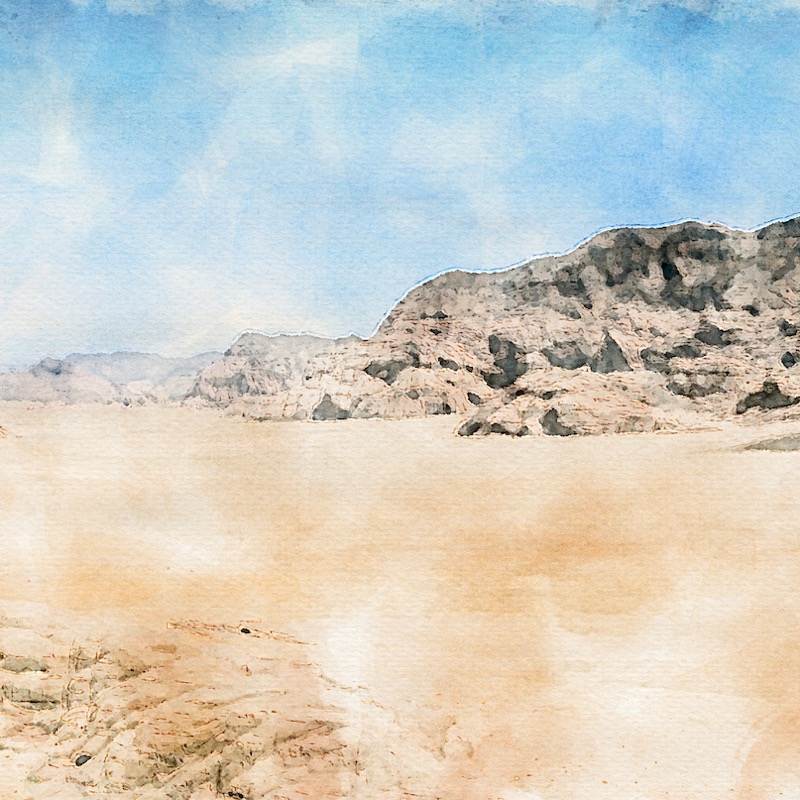
And welcome to the fields of Moab, to the plains of Moab. Perhaps the news hasn't reached you yet, you who are here for the first time. But in the morning sessions of this week, God willing, we shall be leaving Northfield and camping elsewhere, that is, in the plains of Moab, at least camping in our imaginations. You say to me, perhaps, where on earth are the plains of Moab? Well, if you're not, have not been there recently, let me try to explain as the best I can. If you can visualize a map of Palestine, such maps as inhabit the end pages of some Bibles, you'll remember that in the country of Palestine, there's a kind of a big oval thing, often put black, uh, near the top, that is the Sea of Galilee. And emerging at the bottom of the Sea of Galilee, there's a thin black line going down the page, that's the River Jordan, until it comes to another black bot, but blot, uh, that's a bit smaller than the first one, and that is the Dead Sea. Well, now, if you can get yourself in your thinking on the east side of the River Jordan, not the west side, the other side, and come up a bit so you're just above the Dead Sea, a few miles perhaps. They are the plains of Jordan, do you see? And nowadays they belong to the Kingdom of Jordan. They are plains, further to the east rise the big mountain range in, uh, Moab with Pisgah and Mount Nebo, where Moses went up in order to view the Promised Land. So that's where we shall be camping in the morning sessions of this week, in the plains of Moab. And we're going there because there will be some sermons, but the main preacher is a man known to you by name, I think, that is Moses, and he's a far better preacher than I possibly could be, you see. Of course, we shall have to discuss what he says, but the main message is coming through Moses. So let us now track down these plains of Moab in our actual Bibles. Where shall we find them? Well, you might care to open your Bible. I trust you've got one with you. You'll need to keep it open in case you get, you lose me in the crowds that are on the plains of Moab, you see. But anyway, the end chapter of the book of Numbers, verse thirteen. These are the commandments and the judgments which the Lord commanded by the hand of Moses unto the children of Israel in the plains of Moab by the Jordan at Jericho. And let's read on into chapter one of Deuteronomy. These be the words which Moses spake unto all Israel beyond Jordan in the wilderness, in the Arava over against Suth, between Paran and Tothel and Laban and Hazeroth and Dizahab. It is eleven days journey from Horeb by the way of Mount Seir unto Kadesh Barnea. And it came to pass in the fortieth year, in the eleventh month, on the first day of the month, that Moses spake unto all the children of Israel, according to all that the Lord had given him in commandment unto them, after he had smitten Sihon, the king of the Amorites, which dwelt in Heshbon, and Og, the king of Bashan, which dwelt in Ashtaroth at Edrei. Beyond Jordan, in the land of Moab, began Moses to declare this law. And then in chapter twenty nine of this same book, Deuteronomy chapter twenty nine and verse one: twenty nine and verse one of Deuteronomy. These are the words of the covenant which the Lord commanded Moses to make with the children of Israel in the land of Moab. Beside, in addition to, the covenant which he made with them in Horeb. And this is a particularly important verse, for it tells us that just as God appeared to Israel on Mount Horeb, otherwise known as Mount Sinai, so when they were in the plains of Moab, he made a covenant with them. Was in fact not an additional covenant. It was that same covenant given in all the splendor and the awesomeness of Mount Sinai. That same covenant now given again and confirmed. And Israel called to obey it. What's that? Did I hear an objection? You say, some of you, oh my dear preacher, you're not intending, are you, to drag us through the whole book of Deuteronomy this week? Wow, if we'd known that, we wouldn't have come. Book of Deuteronomy is law, isn't it? Law, statutes, ordinances, commandments, and things like that. Um, Mr. Preacher, we're Christians here. You should understand that we're not under law like Israel was. We're under grace. You should talk to us not about law, but about grace. Well, I'm glad to hear it. It is a marvelous fact, isn't it? We as believers in our Lord Jesus Christ are not under, but pray quote it exactly, we're not under law. It doesn't say we're not under the law, it says we're not under law, but under grace. And what a magnificent fact that is, the which we owe to our blessed Lord Jesus, in that when he died at Calvary, he bore the curse of the law in our place to set us free from that curse. You see, law as such is not just good advice. I should love the Lord your God with all your heart if I were you, for that's very good advice. Isn't just advice, not law. Law is command plus penalty. Keep it, says law, but if you don't, I shall curse you. Oh, how far should we get in the pathway of holiness if we were under law? One sin, and the law would curse us. Oh, thank God we are not under law, but under grace. Our motivation and empowering. The presence of the Holy Spirit in our very hearts. Yes, but... now that we are under grace and assured there is no condemnation to them that are in Christ Jesus, God has a program for us, does he not? For the whole of redemption has this in mind at this present stage. According to Romans chapter eight, it is that the righteous requirement of the law should be fulfilled in us, who walk not after the flesh, but after the spirit. Therefore, we need to read God's law, surely. If we are serious and determined to allow God's spirit to do his gracious work in our lives and lead us on that the righteousness of the law be fulfilled in us, who walk not after the flesh, but after the spirit. And as for the book of Deuteronomy, we know, don't we, the attitude of our blessed Lord Jesus Christ to the book of Deuteronomy. We are told that just before he came out into his public ministry, the Holy Spirit led him away into the wilderness, there to be tempted by the devil. You just imagine the power and the impertinence of the devil who dare tempt our blessed Lord and said to him first, if thou be the Son of God, then turn these stones into bread. You can, can't you? You have the power to do it. That, I have to confess, would never have been a temptation to me. Satan could say to me, turn these stones into bread. Never would tempt me. I haven't the power to do it. Our Lord had. Being tempted of the devil, Christ replied with Deuteronomy. Deuteronomy chapter eight, where it is written, man shall not live by bread alone, but by every word that proceedeth out of the mouth of God. The devil came back with the second temptation and took him up to the pinnacle of the temple and said, cast down, cast yourself down. What a spectacular thing that, that will be. That'll get you the converts. Satan dared to quote Holy Scripture perversely, to tempt our Lord to do such a thing. But our Lord answered once more the temptation of the devil with Deuteronomy. Chapter six this time. Thou shalt not tempt the Lord thy God. The devil came back with a third temptation and took him up a mountain and showed him all the kingdoms of the world in a moment of time. He said, now, all this will I give you, for it's been given to me. All this will I give you on this condition, that you fall down and acknowledge my power and authority, if you walk- fall down and worship me. And our Lord met that third temptation with Deuteronomy. Chapter six once more. Thou shalt worship the Lord thy God, and him only shalt thou serve. And it comes as a challenge to my heart, perhaps to yours as well. If Satan were to tempt you, my brother, my sister, tomorrow in his devilishly penetrating way. Would we know enough about Deuteronomy? To be able to use Deuteronomy? To oppose and silence his temptation? It's a book we need to know, isn't it? For very practical reasons. Yes, you say, but after all, Mr. Preacher, life isn't all temptation. Why don't you talk to us about the love of God and cheer up our hearts and minds? Oh. So you'd like to, you'd like to hear about the love of God? Well, I'll tell you a good book to read. It happens to be, have you guessed, Deuteronomy. Moses wrote five books, did he not? Well, if you want to read about the love of God, strictly speaking, the terminology, love of God, then the first book in the Pentateuch to talk of this is Deuteronomy. And oh, what marvelous things are there said about the love of God. As God through Moses talks to his ancient people, Israel. Get this into your hearts and minds, says Moses. I, the Lord, have not chosen you because you were very good and better than others. I've not chosen Israel because it was a bigger and worthier nation than the others. A lot of rogues that you were. I've chosen you because I love you. I loved your forefathers, Abraham, Isaac, and Jacob, and swore an oath to them that I would raise them up a nation. And because of my love and my loving faithfulness to my oath, I've chosen you as well. I love you, says God. And of course he adds that since I love you with everlasting love, I ask in return. Here is love's demand of us. You, in your response to the love of God, shall love the Lord your God with all your heart, with all your mind, with all your soul, and with all your strength. So said the Lord Jesus when he was asked, what is the biggest commandment, what best sums up the whole spirit of the law? He said, the first and greatest commandment is this, that thou shalt love the Lord your God with all your heart, mind, soul, and strength. With your emotions, your soul, with your affections, with your talents, with your mental powers and intellect, with your physical strength. All. And my brother, my sister, there's no escaping, is there, for us, the implications of it. Redeemed, saved from the wrath of God, put under not law as such, but the power of God's gracious spirit. Yet if it be true that God is expecting that the righteous demand of the law shall be fulfilled in us, who walk not after the flesh, but after the spirit, then the demand remains. We are expected to love the Lord our God with all our heart, mind, soul, and strength. And being loved of God, we are s- expected to fulfill the second of the great commandments. Thou shalt love thy neighbor as thyself. God, help us. Yes, we're going to look at Deuteronomy. Not the whole of it, of course. Why no? But we're going to listen to Moses on the plain of Moab addressing Israel, and we shall find it is an intensely dramatic situation. The story so far being told is this, that Moses had invested his life in the people of Israel. He could have been still in the court of Pharaoh, called, entitled, and flattered by everyone as the son of Pharaoh's daughter. He could have been enjoying chariot races with the Egyptian princes. He had perhaps an outside chance of becoming Pharaoh one day, with all the ease and comfort of the sofas and divans and cozy beds of the palace, and all the magnificent art, and the pyramids and their treasures. Moses chose to suffer affliction with the people of God rather than enjoy the pleasures of sin for a season. He counted the reproach of Christ greater riches than the treasures in Egypt. And the then Pharaoh must have thought the man had gone particularly barmy. What was this you're saying, Moses? You are proposing to lead out this lump, these slaves that I have here in the brick kilns, and you're going to take them to some airy fairy promised land somewhere, and the future of the world, you say, Moses, is bound up with the na- this nation, your nation of Israel. Really, Moses? Now come. What's this you say? The prophet, God is going to raise up a prophet like you one day, the Christ. And you're now going to cast your lot in round row with the people of God in the interests of the coming Christ. Yes, says Moses. And they forsook the treasures and the power of the greatness of Egypt and took that bunch of erstwhile slaves out of Egypt, holding before them the enticement of the Promised Land. So they journeyed, and eventually they came to a place called Kadesh Barnea, which was to be the base from which they would go in to the Promised Land and take it for God and for themselves. And when they got there, and sent spies in to reconnoiter the land, and heard what the land was like, they said, Moses, thank you very much, but if we'd known it was like this, we wouldn't have come. We're not going into your promised land. Too full of fortified cities and giants. You don't think we're going to risk our necks, do you, going into there? Why on earth did you bring us out of Egypt? It was more comfortable there, onions and cucumbers and things like that. And they made themselves a captain to return to Egypt. How do you suppose Moses felt? Let alone God. You have to consider what God felt later on. But now, forty years afterwards, they had reached the plains of Moab. Forty years because God had declared that the men that refused to go in and show themselves apostates, they would die out in the wilderness. It would be the second and third and fourth generations that would eventually enter the land. And forty hard years of foot slogging. forty years later. With endless sorrows and difficulties. Not only for Israel, but for Moses. And now, at last, they reached the plains of Moab. This time, it would be a little bit more difficult. The first time they could have gone straight in with no river to cross. This time, God had brought them up east of Jordan. Now, if they were to enter the land, they must first cross the river in flood. And the dramatic question that hangs in the air over the plains of Moab is, what will Israel do this time? Will they have learned their lesson? Will they do what their fathers did and turn back and refuse to go in? Oh, how Moses pleaded with them for reasons recorded in scripture, but at this moment we cannot consider. Moses, through disobedience, had lost the right to go into Canaan with the nation. He would be allowed to s- see the land from afar. He would never live to see them actually go in. He had to get up the mountain of Nebo, died, went off to glory, and God buried him. Ah, but what? Oh, but what if they refuse this time? If only this time they would decide to go in, then Moses could at least die happy that his life of sacrifice had not been for nothing. He straightly warned them that going into the Promised Land would face them with dangers, unaccustomed dangers, and life there would be difficult, with enormous temptations to compromise. It would mean fighting, fighting their way through, in order to enter the Promised Land. As we hear Moses plead with them, command them, cajole them, to take the decision and go in. We shall find rising in our hearts this week, my brothers, my sister, an imperative call by the Holy Spirit of God. What decision shall we make? I don't know what your past year has been, or past years, what progress you feel you have made as a believer. Perhaps you would tell me, oh, by God's grace, it's not my, my goodness, by God's grace. Yes, I can say I have made good progress in getting to know the Lord, in entering into the great spiritual inheritance that already is mine in Christ. And I have made some progress in my responsibility for the spreading of the gospel throughout this world. Perhaps you say that this year has been difficult. Such difficult things on the pilgrimage that has made me wonder whether God's love is real or not. Perhaps you say, well, to be honest, Mr. Preacher, I've wobbled a bit these last few years. I've taken my eye off the ball. I've had other ambitions which have taken the place of my prime ambition and tended to stifle it. And I've not made much progress. Perhaps I've gone back a step or two. I know it, if one can speak for all, that whatever our past experience has been up to date, none of us would say, would we? That our progress thus far has been everything that could have been desired, with no room for improvement. Surely not. We sense the need to push ahead with God, into the glories of his word, into the enjoyment of our great inheritance in Christ. We need to make progress in our responsibility to help forward the work of the gospel in this world, surely. And God will require it of us, surely he will, as this week progresses and the Lord talks to our hearts. If we come and say with utter sincerity, Lord, by your grace, by the strength that is in Christ Jesus, I want to respond to your exhortation. I want to press on. This one thing I will do, press on towards the mark of the high calling of God in Jesus Christ. I've not yet attained. Lord, I have a long way to go, but by your grace, I'm determined to go on and make progress. I think I hear another objection coming up, so I better stop in my tracks. And somebody says, now, Mr. Preacher, it's all right studying Deuteronomy and lambasting those obstinate Israelites. Yeah, well, that's, uh, that's entertainment, but you're going to land yourself into some trouble. What are you saying? That if we want to enter our promised land, we've got to start fighting? Come, come, Mr. Preacher. You must know that Israel's entry into the promised land is a picture of our, uh, uh, uh, entry into our glorious inheritance in heaven, Mr. Preacher. You see, Israel were slaves in Egypt, and they were redeemed by the blood of the Passover lamb, weren't they? Yes, that's perfectly true. And then it was told them that they had an inheritance flowing with milk and honey up the road. Yeah, they were. And we're told by no less an authority than Peter in his first epistle that we've been redeemed, not with corruptible things, of course, of silver and gold, but with the precious blood of Christ. And being redeemed, we're on our way to heaven, thank God. And there, Peter tells us, we're being kept until there's great living hope. There is an inheritance incorruptible and undefiled, reserve- uh, fades not away and reserved in heaven for us. Oh, thank the Lord for that. Shout hallelujah if you dare, uh, you see, because it is marvelous. Beyond this changing world of time, there is an internal, an eternal inheritance that shall never fade in its glory, and we're on the way there. Well, yes, you say, Mr. Preacher, glad you've been converted to that point of view, but, uh, do you see, we don't have to fight to get into heaven, Mr. Preacher. Now come, come, come. It's all of grace. Oh, so it is. Thank the Lord for that. Thank you for reminding me of that. It's all of grace. You take the dying thief on the cross. When he repented and trusted the Savior, the Lord said to him, today shalt thou be with me in paradise. No talking of he's having to fight to get in, of course not. It's a grace, isn't it? All of grace. Yes. But you know, if we're not in our paradise yet, and one day we shall be, we are what Paul says, calls the heavenlies. Read that recently? It's Ephesians chapter six. Receded with Christ in the heavenlies, says Ephesians chapter one. Already. Not in heaven yet, my dear brother. I can see you here on these seats. That's not heaven. And, uh, you will say, you're not in heaven yet. You will be one day, by the grace of God. But we're already in the heavenlies. One, Ephesians chapter one says so. Seated with Christ in the heavenlies. Ah, but Ephesians chapter six reminds us that in the heavenlies, we war. And principalities and powers and the world rulers of this darkness. It's now we've got to fight. Listen to Paul saying to Timothy, fight the good fight of faith, Tim. They hold of eternal life. And John will say, you hoping to to see the Lord when he comes? Yes, marvelous, isn't it? And you know what? When we see him, we shall be like him, for we shall see him as he is. You believe that? Oh, thank the Lord. And you're going to be like the Lord one day, one hundred percent. Good. Well, now, says John, if you have that hope within you and you want to be like Christ in heaven, you'd want to be like him now, wouldn't you? You say, I hope to be like Christ when I get to heaven by God's grace, but I'm no interested in developing a Christ-like character now. That would be a contradiction of thought, wouldn't it? If we say we've got the hope, then we have a bounden duty to perfect holiness now in the fear of God. And that will mean some fighting. What about the unconverted and our responsibility to take the gospel to them? That will take some fighting as well. So this week, I'm going to take a slightly different stance. I'm going to ask you, if that's possible, to forget the typology. You know, Israel going into the Promised Land and their inheritance, and the, uh, and the equivalent is our going into our great inheritance in heaven. I'm asking you to come back in all reality to the plains of Moab, to literal Israel. As they stood with Moses there on the plains of Moab, with the Jordan River now in front of them to the west, and the challenge to enter into the land. What did it mean for them to enter the land? Well, Moses never, uh, uh, uh, uh, uh, pretended that that meant going to heaven, did he? He didn't say if you come out of Egypt and go through the wilderness, then your reward will be, when you get to the promised land, you'll find this heaven itself. You'll disappear through the clouds, and that will be heaven. No, no, no. What they were promised was a promised land here on Earth. So much territory in the Middle East. That's what they were promised. And before they went in, Moses honestly told them, now look here, your tenure of that land will depend on whether you obey the Lord or not. If you should forsake him and join with the idolatry and immorality of the surrounding nations, well, plainly put, God will turn you out of this land and send you back among the nations. This wasn't talking about heaven. A believer will never be turned out of heaven. If you then repent, says Moses, God will bring you back again. If you sin again and go after false gods and their immoralities, God will turn you out again. Though if you repent, he will restore you. It happened, didn't it? They got into the land, but eventually under the kings, their idolatry and immorality became absolutely intolerable. God allowed the Assyrians to take away the ten tribes and the Babylonians to take away the two. Some of them repented, and God brought them back under Ezra and Nehemiah. When our blessed Lord Jesus came, Son of God, their appointed and anointed Messiah, they rejected him and crucified him. Before he suffered, he warned them straightly, because of what you are about to do, God will let your enemies come. They will destroy the temple. Jerusalem shall be downtrodden of the nations, and you be scattered among the nations until the time of the Gentiles is fulfilled. Thus it has been. You say, Mr. Preacher, Israel is back in her land now. There's a sovereign state. So she is. But you must understand this from Holy Scripture, that Israel will never fully occupy that land of promise as long as they reject their Messiah. The land is covenanted by God to Abraham and his seed, and that seed is Christ, says Galatians. Israel cannot put up its fingers to its nose at the blessed Savior and suppose God will give them final and complete possession of the land. They shall not possess it in full until the Lord Jesus comes in power and great glory. Then with him, they who believe him will like he, like him, inherit that land. Oh, the glorious story is, Romans chapter eleven, that one day all Israel shall be saved. Marvelous thing. And if their fall away has been the rich enrichment of the Gentiles, what shall be their restoration? But veritable life from the dead. Oh, you'll see it one of these days. Ah, that was the program. What then was the point of entering the land, as Moses kept on urging them to do? It was the first stage in that great program of God. It was, therefore, a genuine advance in the purposes of God. And men of faith like Caleb and Joshua, in the second and third generations, in hope of the great oath that God had sworn to Abram, dared to cross the river and to enter in. It must have been a great disappointment to at Moses, when at Kadesh Barnea Israel refused to go in, and God said, well, now they shouldn't. The nation would have to wander uh forty years in the wilderness until they got in for the first time. I think I'll have a word in Moses' ear. I can see him be very disappointed and upset at this decision not to go in, and I say, Moses, little word with you. Moses, you're eighty now, you know. Many men at your age are thinking of retiring, Moses. If only the pensions were good enough. Do you see? Um, Moses, if you've got to wait forty years, Moses, now you'll be a hundred and twenty before you get in, Moses. Moses, why bother to make the effort? Why don't you get a decent tent and settle down? Why bother? What would you say, what do you think Moses would have said to me? He'd say, you stupid man, you retire! Give up! And say, well, God will bring them in one of these days. He can do it without me, so he better do it without me. You say, you foolish man. This is God's purpose for now, to move forward, this first stage, and I'm going on with God. God. And I hope to see it in my lifetime, but if God doesn't allow it, one day he will bring them in fully and finally. The thing has a lesson for us, doesn't it? Now let's not confuse matters. Right from the very start of the church age, every believer, when he or she died, went immediately into the presence of the Lord. Yes? Absent from the body, at home with the Lord. Yes. But what about the church? What happened to the church as a whole? Not now as individuals, but as a whole. Paul warned his fellow, uh, uh, disciples that after his departure, grievous wolves would enter in. Peter warned the same of the false teachers that would come. And so did John. Oh, how soon the doctrines of grace were lost. How soon the Lord's Supper was turned into a superstitions, superstitious sacrifice. Was it worth going on? Well, of course it was. There came great revivals, didn't there? Under Wick- in the West, under Wycliffe and Tyndale, and Luther, of course, and Calvin, and Wesley's great revivals, and the Evangelical Awakening. Not to talk of the revival in eighteen fifty nine in Ireland, or that other minor revival under Billy Nicholson. Marvelous moves forward, weren't they, in the gospel? Tell me, my dear Irish fellow believers, how are things now at this moment? You say there's much encouragement in many places, but it's not quite what it was in the eighteen fifty nine revival. We don't see so many coming to Christ as under W. P. Nicholson. And it's a much more difficult world. So what? We're not giving up, are you? We're not saying, well, we might as well grow, uh, uh, retire to graceful retirement, uh, and the Lord will do his work. We need not be bothered. But not I, oh. I can see it in your faces. You say, I don't care what present conditions are. I'm going on with God. I'm going to try and love him with all my heart, mind, soul, and strength. What little bit he gives me in his present program, that by his grace I will do. Assured that God's purposes will one day all be fulfilled, both for his church and for Israel. The Lord keep us in that frame of mind while life shall last. Shall we pray? Now, Father, as we have listened to thy servant Moses and thy word. Speak to our hearts, we do beseech thee. For all thou hast done, we praise thee. We ask now thy grace this week, that our hearts might hear thy voice, and responding to thee gladly, we may, by thy spirit's grace, love thee as best we can, with heart, mind, soul, and strength, and prosecute thy will and thy purpose with all the spiritual energy thou shalt give. Through Jesus Christ our Lord. Amen.