Gooding, David: 10 - The Eleven Goats’ Hair Curtains—The Tent
ID mfh_1087364800Date unavailableBefore 4.08Restored 4.54
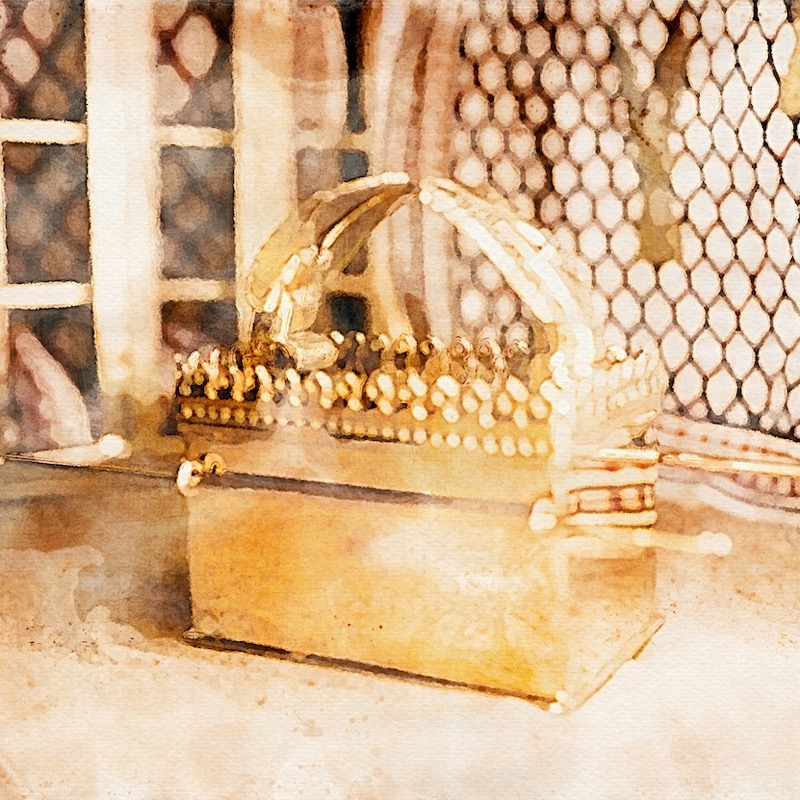
Thank you, Mr. Chairman, sir, for those kindly remarks. It has been nothing but a pleasure, as well as a privilege, to be with you here these two weeks. Welcome, therefore, to this, the last, uh, lecture in our series of studies of the ancient Jewish tabernacle. In our last two lectures, we have studied in some detail the tabernacle strictly so called. Let me say again that the term the tabernacle is widely used both in scripture and elsewhere to describe the whole of this particular setup. Indeed, the first division in the building is called the first tabernacle, and the second division, the second tabernacle, otherwise called the holy place and the most holy place. But then we discovered, two lectures ago, that the term the tabernacle is used in a more restricted sense in other places, and refers to the inner set of curtains that formed the dwelling place of God, known as the Mishkan. They were ten curtains, sewed along their length into two groups. There was five— there were five in one group, five in another. And then by an elaborate system of fifty loops on the selvedge of one set, and fifty loops on the sel- selvedge of the other set, and then fifty clasps of gold, the ten curtains were fastened together that they might be one. And as we studied these curtains, the Mishkan, we noticed that they were a plurality in unity. Ten curtains, though they were many, were one Mishkan, one tabernacle. And the tabernacle, though one, was composed of many curtains. We saw that when John comes to write his gospel, he deliberately invokes the memory of this ancient tabernacle, the ten curtains fastened together, by choosing a word in Greek that sounds very much like the Hebrew word for the tabernacle. So the Hebrew word for those ten curtains is Mishkan. The M in front denotes it's a noun, and then the rest of it comes from a verb. Its consonants are SKN, to dwell. John then, in his first chapter and verse fourteen uses a Greek word that has those same consonants, SKN. And the verb he uses means to pitch a tent. So he says, the Word was made flesh and pitched his tent among us. Deliberately recalling by the sound of the very words, and of course their sense, the ancient tabernacle where God deigned to presence himself in that tabernacle and tent. Now, tonight we are to move on and to consider the next set of curtains. Of course, the tabernacle curtains, being so beautiful and so sacred as the dwelling place of God, had to be protected from outside elements. And so if we start outside, the curtains were protected by some s- seal skins. Older translations call them badger skins. They were unlikely to be badgers because there are no badgers around in that part of the world. Most commentators imagine they may have been dugong, a sea cow, for many sea cows are to be found in the Red Sea. Dugongs and sea cows not being common in Belfast, we had to use, you see, a, uh, near equivalent, and where ours is of seal skin. They were skins. They went right over the top of everything. Then underneath the seal skins were again some skins. They were of, uh, ram skins, tanned. The older translations say they were colored red, but the actual verb means that they were tanned. Ranskins tanned, and they went underneath the, uh, uh, seal skin to protect the tabernacle. Scripture, however, only spends one verse to mention those two sets of skins. They were there for practical purposes, to keep the desert sand out from the inner part of the tabernacle, and occasionally in the desert, when they get a thunderclap and a torrential downpour, to keep the rain out. They were practical i- in their purpose. Underneath them, however, and once more over the tabernacle curtains, there was this very elaborate system of goat's hair curtains. And like the tabernacle itself, they were composed of individual curtains sewn together, this time into five, uh, uh five curtains in one group and six curtains in another, with loops down the selvage of each set of curtains, and then passing through the loops were clasps of bronze, so that the tent, and here we come to the name of this set of curtains. This is the tent, Hebrew ohel. It's a tent over the tabernacle. The tabernacle, you remember, is the series of ten curtains. So this tent, these goat's hair curtains, were the first line of protection coming upwards. The ohel, the goat's hair curtains, the tent over the tabernacle, but made with that same complicated method as the tabernacle itself. So let us read some of the technical details from the actual, uh, record. This is Exodus chapter twenty six m And beginning in verse seven. And thou shalt make curtains of goat's hair for a tent over the tabernacle. Eleven curtains shalt thou make them. We notice the difference between them then and the tabernacle. There were only ten curtains in the tabernacle. In the tent there were uh eleven. The length of each curtain shall be thirty cubits. And here we notice another difference. The length of the tabernacle curtains was, uh, twenty eight cubits. As a result, when the ta- tabernacle curtains were put over the frames, the tabernacle curtains didn't reach the ground. You'll see each frame is ten cubits high. The breadth of the tabernacle is another ten cubits, and of course the frames the other side are ten cubits. And when they taught me arithmetic a long time ago, that added up to thirty. The tabernacle curtains, therefore, were only twenty eight, and so at the sides they were a cubit short of the ground. The goat's hair curtains, however, were of thirty cubits, and they were deliberately thus so that at the sides and the back, uh, they could cover the tabernacle curtains completely. Then, as I say, there were eleven curtains. They were the same breadth as the tabernacle curtains, but because there were eleven of them, they could, uh, do as follows. The eleventh curtain at the front here was doubled over, so that it, uh, uh, doubled over and under, as far as we know, under the tabernacle curtains, so that the tabernacle curtains would have been protected from the front and down the front sides. And then that gave you an extra half of a curtain at the back, and the directions tell you that that extra ha- hung, uh, over the back of the tabernacle, meaning over the back of the ten beautiful linen curtains. Then we are told, let's read further the, the technical detail. Verse nine. thou shalt couple five curtains by themselves and six curtains by themselves, and shall double over each cur- the sixth curtain in the forefront of the tent. And thou shalt make fifty loops on the edge of the one curtain that is utmost in the coupling, and fifty loops upon the edge of the curtain which is outmost in the second coupling. And thou shalt make fifty clasps of copper, and put the clasps into the loops, and couple the tent together, that it may be one. And the overhanging part that remaineth of the curtains of the tent, the half curtain that remains, shall hang over the back of the tabernacle, that is over the back of the ten curtains. And the cubit on the one side and the cubit on the other side of that which remaineth in the length of the curtains of the tent shall hang over the sides of the tabernacle on this side and on that side to cover it. So run the technical details of this exceedingly important set of goat's hair curtains. So immediately we recognize the similarity between this tent of goat's hair curtains and the tabernacle curtains, which were of fine twined linen. Now, when we were studying the tabernacle and observed that there were ten curtains in two s- uh, 2 separate bunches, so to speak, sewed together, five in one and five in the other, and then they were linked together by fifty loops on the one side and fifty loops on the other, and joined by fifty clasps of gold. We said to ourselves, does that detail in any way act as a foreshadowing of the good things to come? Because the New Testament tells us that the whole building and its, uh, sacred vessels acted for the Israelites at the time as a copy of the heavenly things. God, in his great kindness to his people when they were spiritually children, brought down great eternal truths to them by means of simple symbols. Just as a mother, when she bathes her firstborn son, gives him a toy airplane to play with. Do you see? He half imagines it's real and goes zoom, zoom, zoom all over the place, do you see? Of course, he doesn't use a toy airplane now. He's grown up. He's pilot, captain indeed, on a transatlantic airliner. But the little toy airplane served its purpose not only to entertain him in the bath, do you see, but to get an idea of an airplane into his head. It was a foreshadowing for him of the great reality that eventually he would captain as it flew over the Atlantic. So the tabernacle and its sacred vessels were copies of things in the heavens for the people of the time. But they were also, says the New Testament, shadows of the good things to come. When, therefore, we were studying the tabernacle with its ten curtains, two parts joined together, a plurality and a unity. We said to ourselves, could that illustrate anything about our Lord? And we found it could indeed. For on the day of Pentecost, our blessed Lord, in whom all the fullness of the Godhead dwelt bodily, on the day of Pentecost, having ascended to heaven, he poured forth his Holy Spirit on his people, and they were baptized in the Holy Spirit and made to drink of the Holy Spirit, uh, and thus baptized into one body. One body with the Lord Jesus. He, the head of the body. And it's not just a metaphor, it is a reality. For our Lord and his people have the same life. He has given them the Holy Spirit. And we enjoyed our study that night, looking at the, what the New Testament says about the body of Christ, its present function and its eternal function as the executives of the Son of God in all the plans that God has for universes and worlds to come. But tonight, of course, we are met with the same feature. For the goat's hair curtains are in two groups, this time five and six. They are joined together that they might be one by the same system, fifty loops on the one side and fifty loops on the other, with fifty clasps, this time of copper. And those knowledgeable in scripture couldn't resist the temptation coming into their minds at that juncture to remember what happened on the day of Pentecost. Because Pentecost means the fiftieth day. It was indeed the fiftieth day after our blessed Lord rose from the dead as first fruits of them that slept. And he sent out his spirit. And there was formed there and then the body of Christ. Christ and his members sharing the same body, the same life. If that's what it, uh, pointed to when it was the tabernacle curtains, could it be that these goat's hair curtains point to a similar thing? Well, here I can rely on your knowledge of the New Testament. There is another very important part of our Christian gospel that talks about our being joined to Christ. And that is in such passages as Paul's letter to the Romans in chapter six and chapter seven, where we are told we were baptized into his death. And because we were baptized into his death, we have died with Christ. And just as Christ was raised from the dead by the glory of the Father, so too we have been raised with Christ. So that, as Romans seven puts it, we have been separated, released from the law, that we might be joined to Christ. Let me quote you the exact wordage. You'll see. Uh, this is Romans chapter seven. And when I quote the exact wordage, you will see the point. W- Romans seven verse four: wherefore, my brothers, you also were made dead to the law through the body of Christ, that you should be joined to another, even to him that was raised from the dead, that we might bring forth fruit unto God. So that we have become the body of Christ, and therein lies a very big provision, this time for our deliverance from the bondage to sin, our deliverance for the domination of the law. And the secret be- has been that when Christ died, we died, and when he was raised, we have been raised to share his risen life, and being joined to him, bring forth fruit to God. So once more, we are in the presence of a plurality in a unity. We died with Christ, we're risen with Christ, we are joined to Christ. And And there therein, in as I say, lies the secret of our deliverance from the slavery and power of sin. So let us turn to Romans chapter six to see what lessons are drawn from this fact that believers in Christ have been united with Christ in his death, his burial, and his resurrection. This is Romans six verse one: What shall we say then? Shall we continue in sin that grace may abound? God forbid. We who died to sin, how shall we any longer live therein? Or are you ignorant that all we who were baptized into Christ Jesus were baptized into his death? We were buried therefore with him through baptism into death, that like as Christ was raised from the dead through the glory of the Father, so we also might walk in newness of life. For if we have become united with him by the likeness of his death, we shall be also by the likeness of his resurrection. You couldn't come across a more fundamental fact than this in Holy Scripture. It is now explaining to us the significance of Christian baptism. Baptism is a symbolic burial. For when a person is baptized, they are put under the water, buried. Mercifully, it's not just a symbolic burial. You don't leave them there. It is a symbolic burial followed at once by a symbolic resurrection, do you see? It's important to get the both sides of it, do you see? Now, under British law, we don't bury people to make them die. Well, we shouldn't, I really, on the whole, do you see? We actually wait till they're dead, and then we bury them. And if we are proper candidates for Christian baptism, we have to be dead first. You say, what do you mean? Oh, well, that's what repentance means, you see. True repentance is not just repenting of this sin or the other sin or some other sin. It's coming to see that under God's law, we are convicted of having broken God's law. We have not continued in all things that are written in the law to do them. And God's holy law curses us. We have deserved its sentence. Repentance means coming to see that that is so. We deserve the judgment of God's holy law. Now, that is a something that some people find difficult. In my experience, it is the reason why many Christians have not yet assurance of salvation. They've got the idea that being saved means that they forthwith improve out of recognition. And when they don't improve out of recognition, they begin to doubt whether they are saved at all. Let me use an illustration. Here's a man, and he comes to his doctor, and he finds it difficult to breathe, and he keeps coughing, do you see? He's been a, a, a smoker, thirty or forty or fifty a day. It's ruined his lungs. And the doctor examines him and says, yes, I'm afraid you've ruined your lungs. There's only one hope for you, that you have a t- transplant completely, new heart and lungs. Oh no, says the man, I'm not as bad as that. I admit I, I am a bit ill with my lungs and things, you see, but I, I, I, I've given up smoking, you see. That ought to count for something. Yes, says the doctor, as pity you didn't do it earlier on, but that won't save you now, just giving up smoking. You are so bad that only a radical operation can save you. That what, that is what God says to all of us. We know that what things soever the law says, it says to them that are under the law, that every mouth may be stopped and the whole world become guilty before God. When I hear God say that, and he calls on me to repent, repentance means agreeing with God over that sentence, that verdict. Left to myself, I will perish. Nothing I can do can save me. But if I will repent, the glorious news is this, that God's own dear Son has died for me and borne the penalty of God's holy law in my place. As Paul the Apostle puts it, the law cursed us because we had broken God's law. And the law says, cursed is everyone that continues not in all things in the law to do them. And then, says Paul, I understood what Christ had done. For it is told us that Christ was crucified on the tree, on the cross. And cursed is everyone, said the Old Testament, that hangs on a tree. For in those old days, if a man had committed a exceedingly serious crime, he was first of all put to death, and then he was taken and his body hanged on a tree until nightfall, as a warning to all others. And Paul was converted when he saw this. He had deserved the law's curse. Christ had borne the curse for him. That is then repentance. And when I repent, I admit that in the sight of God's law, I am worthy of death. Says Paul, I died to the law. The law condemned me to death. I accepted its verdict. When we do that, then God has a salvation for us, and that's what baptism signifies. Baptism doesn't do away with our sins. What it signifies is before God's law, I admit I am a, a s- a sinner worthy of death. But Christ died for me. And when he died, it is as though I died. And believing on him, I am baptized into his death, a symbolical burial. And then, at once I'm raised out of that sim- symbolic grave, that I may walk in newness of life. That is not just a faint wish, I hope I shall walk in newness of life. It is illustrative of the fact that when we come to Christ, his death counts as our death, but his life is given to us. And in his resurrection, we're raised with Christ, and he shares his risen life with us. That's the glory of the Christian gospel. A new power, a new life. And that's what baptism, Christian baptism, signifies, symbolizes, if you see. The person is re- raised up out of the watery grave to walk in newness of life because Christ has given them new life. Let's pause a minute just to digest that. That's tough theology, isn't it? But it's true doctrine and could mean somebody's salvation even here tonight, you see. Well, then we are to know certain things. Verse six tells us, knowing this, that our old man was crucified with him, that the body of sin might be done away, that we should no longer be in bondage to sin. For he that has died is justified from sin. And perhaps the question is rising in your mind, please tell us who this old man is. It's quite a common notion, you know, that we human beings, we're like nice rosy red apples, very wholesome and sweet to the taste, except we've got a little bit of nasty, a little, you know, uh, a little gone bad bit, you see. If only we could get that bad bit out of the apple, then we should be a complete rosy nice, fruitful a- a- apple all the way through. That's false. Quite false. Our old man is not the nasty bit of us, so that if we got rid of that, we could then be altogether beautiful. It's not that. And I can take an illustration to show it to you. I'm called up before the magistrate because the police caught me doing sixty miles an hour, uh, uh, uh, in a road that was limited to thirty miles an hour, you see. And the magistrate has convinced me of this, this is the evidence, I can't deny it. And now I say to the magistrate, but you see, I, I tell you how it happened. Do you see. I was driving up the road, and there was this driver, we won't tell her sex, and she was wandering all over the road, and just as I, I wanted to pass, she would pull out there, and as I went the other way, she would pull back there, you see, and uh, and uh, I got so worked up, and the temper got the better of me, that when at last I got uh, past her, I put the foot down and I scorched up the road. I do admit it, but that wasn't me, it was my temper, you see. Well, the magistrate says, we'll find your temper then. No, he wouldn't. He'd find me. I was responsible. I shouldn't have let the temper do that on me. And I have to pay the penalty. The old man is we ourselves before we come to Christ. Responsible for all our ma- misdeeds. We've broken the law. The only thing the law could do with us was to have us executed. And God in his mercy has provided Christ, that if I put my trust in him, I, the one who broke God's law and deserved its penalty, can be regarded by God as having died with Christ. Glorious release, that isn't it? For he that has died is justified from sin. We're told God keeps a record of our deeds, and perhaps you're saying to yourself, hmm, listen to him talking about our sins. You'd love to go s- and get hold of one of the books where the record are, wouldn't you? And you say, we turn up that, uh, gooding man in the pages of God's records and just see the things that they've been up to, you see. Mm-hmm. We will find a lot of red, I'm telling you now. I'm telling further that it would come to an end, and it would say, the accused died. Count closed. Died, you say? When did you die? When I trusted Christ. His death was counted my death. As far as the law is concerned and its penalties, I've ceased to be. He that has died is justified from sin. You say, well, if that's so, how many times do we have to die? Well, Paul gives us the pattern. Knowing that Christ, you see, being raised from the dead, dies no more. Death no more has dominion over him. For the death that he died, he died unto sin once, but the life that he liveth, he liveth unto God. Even so reckon ye also yourselves to be dead unto sin, but alive unto God in Jesus Christ. The pattern is set by Christ, and we can ask the simple question, when Christ died for our sins, how many times did he die? Is it so that he dies every time we do a sin? Well, of course not. He died to sin once and for all. That is, to sin's penalty. Reckon yourselves to be dead to sin and its penalty in that same way when Christ died, you died. And reckon yourselves now to be alive unto God in Jesus Christ. So we are alive, no longer in fear of the penalty. Let Romans eight and verse one remind us of this glorious fact. There is therefore no condemnation to them that are in Christ Jesus. Glorious. So set free from the fear of condemnation, we are to present our members alive to God, for God to use our members to his glory. For sin shall not have dominion over you, says Paul, for you are not under law, but under grace. And what does that mean? Sin shall not have dominion over you, for you are not under law, but under grace. But when you read of law in this sense in scripture, we should remember that law is not just good advice. The word law in the Old Testament means direction, teaching, instruction, advice, but it's not just advice. It is command plus prohibition. It is command such as if I break it, there is a penalty, and the penalty is death. Suppose I wake up one Monday morning and I see the law standing beside my bed. Oh. And the law says to me, Gooding, get up. And this day you will love the Lord your God with all your heart, mind, soul, and strength, and your neighbor as yourself. And if you break that command, I shall curse you. What would you do if you were me? I think some of you would get up and have a go. I wouldn't. I know from experience of many years, good as my intentions are, and wanting to please the Lord the best I can, and to love my neighbor as myself, but in many things I come short of the standard required by the law. And if I come short again, and the Lord's going to curse me, well, what's the good of my trying? So I say to the law, well, it's no use, I shall stay in bed, and then the law will curse me for staying in bed. And sin would have dominion over me, wouldn't it? Every time I fail, I should be under the grim power of sin. Oh, thank God. That is no longer true of a believer. For Christ has paid the penalty of the law. We're free. And in being free, we are free now to present our members to God as those alive from the dead. And whenever we stumble and fall, as we do many times, then God's word assures us, if we confess our sins, he is faithful and just to forgive us our sins and to cleanse us from all unrighteousness. We are dealing, therefore, here with God's provision to begin to make us holy. Now we're justified by faith in Christ, now begins the long process through life of God's training by God's Holy Spirit to develop in us a truly Christian character. And there's no deceiving ourselves. It's going to be a long business. We shall fall many times. God knows it's a long business. But as for the penalty of our failure, Christ has paid it in advance. The school I went to eventually taught chemistry. But boys who were going to learn chemistry, their parents had to pay down a lump sum of money before they even began. The risk was, you see, that the boys would mix the wrong kind of chemicals and blow the whole place up, you see. Ha. And the school wasn't going to take the risk of that, and so the parents had to pay in advance for this education in chemistry for their dearly beloved, uh, little boy. Mm-hmm. I am to tell you that God has paid in advance, you believers, for your spiritual education. So that with him you may face it without fear of final condemnation, knowing yourselves accepted. There is no condemnation to them that are in Christ Jesus. When we fail, we are at liberty to confess, and we must do it, confess our sins, and he is faithful and just to forgive us our sins, and we can get up and go again. That is the glory of our salvation. To repeat, therefore, we died with Christ since he bore the penalty. We accept God's judgment. Christ paid the penalty. Now he's risen, and we're risen with him. One body with Christ. So is our hope of progress in the Christian life and developing a truly Christian character. You'll see in Romans seven, Paul points out to us, even as believers, we can bring our will to bear upon life. I won't do that anymore. I will do this as I'm told to do. Try to develop strong willpower. Says Paul, but I found it that the thing I would do, I don't do. And the things I didn't want to do, I do. And then we can bring our emotions to the thing. Says Paul, I delight in the, in the will of God, you know, I do really. And when I can consider the will of God, I see it's the only sensible way to live. I delight in it. But then from time to time, in spite of my delight in the law, I go and break it. With my mind, he says, I serve the law of God. Now this is intellect, and we can bring our intellect to bear upon the problem and say, now look here, old chap, this is insanity begun to behave like you're be- behaving. Go and do it instead of, uh, in spite of it, says Paul. You see, will, emotion, and intellect combined is not enough. Will leave us failures. What is God's answer? It is given by this union with Christ. Join with Christ, that he may bring forth fruit through us to God. Or put it in the words of Romans eight, that, uh, God has condemned sin in our flesh, that the righteous requirement of the law shall be fulfilled in us who walk not after the flesh, but after the Spirit. Does that mean, therefore, that Christians can take a rather careless attitude to sinning? No, indeed not. For at the end of chapter six, Paul points out that though there is no condemnation to them that are in Christ, there are consequences. Let's use a simple example. Christian man goes to London for his firm, puts up in a hotel, yields to temptation, gets drunk, falls off the veranda, twenty foot down on the ground, crushes his leg. The surgeon has to amputate it. When the Christian man realizes the foolish thing he's done, he seeks the Lord's pardon, and the Lord forgives him, of course, and restores the leg. No, not necessarily. When the Lord Jesus comes and takes us bodily home to glory, he'll get a body with two legs. But there are consequences of sinning that remain with us to life's end. We're not wise to go on sinning. We are to perfect holiness in the fear of God. And now, very briefly, I want to come to one other provision in this ancient tabernacle for the preservation of its holiness. This is not now the curtain. This is this wall of linen that you see running right round the court of the tabernacle. It is pure white linen and was there, of course, to preserve the holiness of God's house. Now, when we talk of holiness and ask what it means, we can do, uh, two contrasts. Holiness, of course, is the opposite of uncleanness. But holiness is also the opposite of what is common. So, as people that wish to be holy, we must avoid uncleanness, of course. But as people that want to be holy, then we must give heed to the other dimension of holiness. And that sense of holiness is to be devoted to God. Let me take an illustration. There were some sacrifices that, uh, part of which were given to the priests. So they were given a, a big part of the meat of a bullock, say, and then they had to cook it to eat it. And the dear priest's wife lent, um, a saucepan or whatever you do when you boil meat. Don't understand it altogether, but there you are. It lent him a saucepan, and he, he boiled this, uh, this meat, uh, in the saucepan. I tell you something about that saucepan. The dear lady never got it back again. Because in touching these things, it was holy, given over to God. Holiness means, therefore, for a believer, yes, we have to perfect holiness in the fear of God, cleansing ourselves from all defilement of the flesh and spirit. But there's a positive side to it. We are required to give ourselves over to God, are we not? To change the language a little bit, we are called upon to yield our bodies a living sacrifice, holy, acceptable to God, that we might serve God even in our secular employment and in our family life, but holy. And we are part of God's temple, says the New Testament. And the temple of the Lord is holy, which temple we are. So, look at these pillars. You can easily imagine them, can't you? As individual believers, just for the moment. Look a bit like them, don't they? Well, perhaps not all that much, but anyway, they'll do. Representing us as believers, and their task is to hold up that screen, to make a difference between what is holy and what is common, between what is clean and what is unclean. And you see, if they don't do that, there would be no point in having a gate, would there? If there were no, uh, curtains here, you won't need a gate to get in. And if believers in a place misbehave, sadly misbehave, so it's scandalous misbehavior, they might as well not preach the gospel, might they? The world say, well, look the way they behave, and they claim to be saved. Well, their gospel is a nonsense. It depends, does it not, on our testimony as believers. That enforces the need for salvation for folks who were to come to God. To help them in their task, each of those pillars stood in a solid socket of bronze, do you see. That gave them a solid sort of grounding. I noticed the New Testament talks like that of believers. Says Paul, you see, ah, we shall be presented without fault before the presence of his, uh, glory with exceeding joy. That is on on the understanding that we remain in the faith, grounded in the faith, grounded in the gospel, and be not moved away from the hope of the gospel. We need grounding. Not only grounding in the truth of God, but as Ephesians chapter three puts it, that Christ may dwell in our hearts, that we being rooted and grounded in the love of God. We do need rooting and grounding. I have seen many Christian young people come up to university. And on the whole, what a marvelous testimony they have given in the university. I've seen more than I care to of young people being believers, coming up to university, and being swept away as far as their faith is concerned entirely. All you pastors, elders, see to it that the young folks are rooted and grounded in the faith, in Christian doctrine, that they may know what they believe and be equipped to stand for it, and rooted and grounded in the love of God, with all that security that comes thereby. And then these, uh, pillars were, uh, given ropes, guy ropes that came from the top and went, uh, to a pin in the ground, you see, so that when the wind blew, uh, you see, they could hold on to the pin fastened in the ground. Well, in the prophecy of Isaiah, our Lord is likened to such a tent peg, but we haven't the time to consider that now. But I do remember being on holiday in Peterhead in Scotland in my youth, and one of the good Christians there had a fishing boat, and he took me out out on it. Some unearthly hour of Monday morning it was, and the sea wasn't very good, and he was, he later confessed, actually, he was expecting me to turn green, you see, like people do, I see. I managed actually not to turn green, but that's another story. The old fisherman told me, you see, when the wave rocks the boats, if you know the boat, it's all right because suddenly the wave jerks the boat and you know what to get hold of. Whatever part of the boat you're in, you know what to grab. But if you are in a strange boat and a wave suddenly comes and the boat jostles and you don't know what to grab while you're looking for something to grab, you're over the side. It's good we have a savior, isn't it? And it's good to have some of his exceeding great and precious promises and know them and dare to trust them, that when the trouble comes, we can get hold of God's promise and word, that it might be an anchor to our soul, even though the weather is rough. And then those pillars, they had silver on the top. That silver was the same as the silver sockets in the tabernacle itself. It was made from the ransom money, from the redemption money. But here it was on their heads. If we're going to stand in this world for God and maintain his standards of holiness, we shall need to be grounded, and we shall need to have on our heads what the New Testament calls the helmet of salvation. He's coming. Whatever the trial, it will not last forever. He's coming. And we wait for the Lord Jesus. He's coming to affect our a- adoption, to wit the redemption of our bodies. What a glorious hope. And that hope shall stabilize us until he comes. Well, all I can add now is to say that when the tabernacle was built, the dear ladies worked hard, the men worked hard in all their various skills, and they made this beautiful thing. Then came the day when they presented it to Moses, and Moses inspected it, and he saw that they had done what the Lord had commanded. We likewise have to work for him and for his work in the church and in the world. When the Lord Jesus comes, we shall bring our work, can't we? It won't be Moses who inspects it. It will be the Lord that inspects it. God grant that as he inspects our work, he may be able to say of some of it at least, well done, good and faithful servant, enter into the joy of thy Lord. So let us pray to that end. Our Father, now gratefully we thank thee for thy word. We thank thee, Father, for thy kindness to us, in providing us with many an illustration, that we may be able to imagine and grasp by our imagination the truths of thy holy word. We thank thee for treating us as adults and spelling out thy great salvation in doctrinal terms, that we might examine the it and the details of our salvation and grasp with the mind thy work and thy word for us. Now we thank thee for this illustration of the tabernacle. We thank thee for the salvation that thou has provided by joining the believers with the Lord Jesus to share his life and his victories. We pray, Lord, thy grace, that in the days that are left to us, we may lay hold of the great promises thou has given us, and prove in experience the life of Christ sustaining us, that we may work well for thy glory, so that when the Lord comes, we not may not be ashamed before him, but hear his well done, good and faithful son. And now we thank thee for Christian fellowship and for the food that shall be provided for us. We take it from thy gracious hand and show thee our gratitude, and grant that our Christian fellowship together may serve the purpose of strengthening us each one, that we might the better serve thee and fulfill thy desires for us until the Lord come. We pray through Jesus Christ our Lord. Amen.