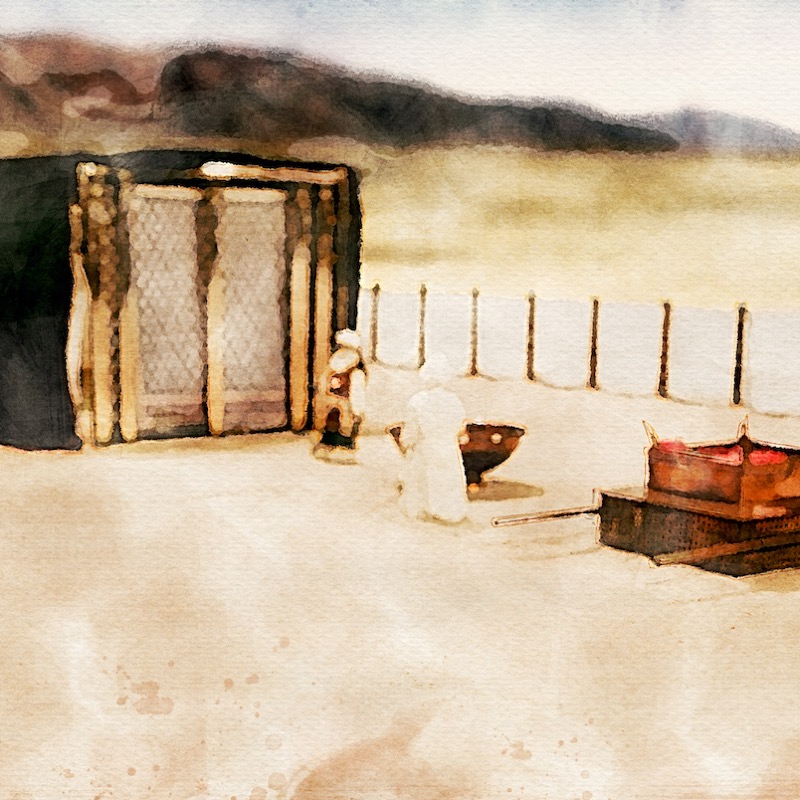
Gooding, David: 1 - The Bronze Altar
ID mfh_1087316797Date unavailableBefore 3.21Restored 4.44
This is not just a matter of an- antiquarian interest. As we study this ancient tabernacle further and see how the New Testament writers make use of it to illustrate the grand truths of Christianity, you will perceive readily that behind the whole thing, uh, are spiritual, moral, and spiritual lessons to be learned. So that if in the course of the week I say things that strike you as odd, or not true, or irrational, or something of the sort, when it comes to these profounder matters, do feel free to come and talk about them. I may bark like a dog, but as historians will declare, I have never bitten anybody yet. So we study this model this week, and let me tell you what it's a model of. It is a model of the first temple or sanctuary, so-called tabernacle, that we read of in the Old Testament. The original goes back to the second millennium BC, before Christ, so that we are studying something that was, uh, is now over three thousand years old, made at God's command through Moses by the Israelites. And the background history is this: the nation had been in the slave camps of Egypt for around four hundred years. They were eventually, so the story goes, set free, delivered, redeemed by God, and set free from their slavery. And they were promised that eventually God would give them a land for their inheritance, a land flowing with milk and honey. But to get from Egypt, from which they had been redeemed, to that great inheritance that lay out beyond them, they needed to travel across the desert, the Sinai Desert. And therefore, at that time, when they shortly after they had come out of Egypt, God instructed them to build him a sanctuary that he might dwell among them. This building, which as you will see, uh, as the lectures go on, is a portable building made so that it can be easily dismantled to travel and then be put up perhaps for a night here, a night there, or weeks there, or perhaps a year or more somewhere else. It was a portable building. It was a tent, a gorgeous tent though it was, uh, uh, was simply a tent. It was God's gesture to his people. And as he explained later on to s- King David, he talked to David of all those years when he said, I walked with Israel through the wilderness. What a fantastically, uh, uh, gracious condescension of God, having redeemed his people, he came down, so to speak, to dwell in the tabernacle, to presence himself there. Not merely that he might be worshipped, though it was a center of worship, but that he might share the life of his people and walk with them every foot of the way from their original house of bondage until they got to their glorious inheritance. That is why, of course, when you come to the New Testament, we will find the New Testament writers using this tabernacle and the history that surrounds it as a parable, even for us today. For Christians are taught that they are in bondage through s- to sin and to Satan, but that God, in sending his son to die for mankind upon the cross, has made possible our redemption. We are redeemed by the blood of God's great Passover lamb. And Christians are told that beyond them, at life's end, there is an inheritance incorruptible and undefiled and that fadeth not away, reserved in heaven for us. And that is a glorious message in itself for us in this modern sophisticated generation, where so many people have lost their bearings. They know success in the world. They have their enjoyment of life, and rightly so. But then they wake up to the fact, where is life leading us? Is there any goal? Or are we, after all, just a concoction of atoms that happen to have produced intellect. And then in the end, when life is done, we disappear into nothingness. These are our fundamental questions, aren't they, as human beings? What of this great story that there is a heaven? There is an inheritance incorruptible and undefiled, and that fadeth not away, reserved in heaven for us. And that life is a journey from this world to the next. If that be true, ladies and gentlemen, as true it is indeed, then the glory of it sheds a glow upon even life's simplest things. And therefore we shall find that the New Testament writers will use this tabernacle and its functions and the various symbolic furniture, that we may be able that more easily to grasp what God was saying to Israel then and what God is saying to us now. So let's acquaint ourselves for the first while with the bare bones of the facts about this ancient tabernacle, and we shall look first to the, uh, plan of it, the ground plan of it. There it is. If you can't see it, stamp your feet or go- or shout or something. Don't be afraid to protest. Uh, and there it is. You'll see the ground plan, and it was a courtyard around, all the way around it. There was a gate at this lower end, the east end, and then the tabernacle building there. It had two compartments, and in the second compartment there stood the throne, the symbolic throne of God, called the ark, covered with the mercy seat. Now you will notice that if you start here at the east gate, with a desire in your heart, so to speak, to come and find God and to approach God, the way in was marked by a series of pieces of furniture, starting with that big altar there, just inside the gate. Then going to this object here, which is, uh, the laver. This is where the sacrifices were offered and the blood was shed. This laver, a basin filled with water for purification. Then coming in past the first curtain here, which is called the door, you enter the first, which is the holy place, so called. And if we neglect the furniture to left and right and come straight in, we shall find there the golden altar of incense, standing outside a beautifully decorated curtain on its pillars, gold overlaid pillars, the place where the priest would uh approach God at the time of prayer. And then, passing through that curtain, you come at last to the immediate presence of God and to his throne. There they, God said he would presence himself there, he would commune with them above the mercy seat. So the road in was marked by these four big vessels, beautiful vessels in themselves, and full of symbolic meaning. There were two other vessels, one on the left as you went in, not on the direct road in, but on the left. That was a lampstand, and the other was a table on the right hand side. You'll see. Now let's, having seen the plan, let's look at some of the, uh, vessels, uh, that were inside. And you will see them, first of all, inside the gate, the big altar. Push it up a bit, if you could. That's right. All can see. That is the big altar just inside the gate. It was, uh, made of wood inside, but overlaid with bronze. Sometimes in some translations called the brazen altar, but it wasn't made of brass, it was overlaid with bronze. At that, the fire never went out. On it were offered thanksgiving offerings, and in particular sacrifices for sin. You see the equivalent there in the model in the court. Vessel number 1. Vessel number 2. There was a laver. The laver and its foot, as it's so called. That was filled with water, at which the priests washed their hands and feet whenever they went into the tabernacle to do the divine service. The artist has taken one or two liberties therewith. They didn't dip their feet in the water. You'll see they drew the water out, of course, but the artist, being what artists are, you know, eh, uh, he's made the point for those that are looking on that that was what it was for, to wash hands and feet. It was a second vessel on the road in towards the presence of God. Now let's move inside, still keeping to the main road in towards God. And we come across another altar. Oh, sorry, we're now going in for just to show you what the inside looked like. Sorry, those of you who tonight can't see inside, uh, you you can come round afterwards, and we'll take the curtains away so you can see inside. But the effect as you walked inside would have been stunning because the framework of the tabernacle was not solid boards. It was open ladder-like work. And the beautiful tabernacle curtains, with their blue and purple and scarlet, with cherubim embroidered thereon and thrown over the frames. When you went inside, you would see them, of course, pe- appearing through the interstices in the frames. It would have been a magnificent thing, so that round you to the left would have been those cherubim, and above on the ceiling, cherubim. You might, if you were simple enough in those days, have thought you had got to heaven already, do you see? But it was meant to be a model and an illustration of him. Let's go in further a bit. Yes, and that is a cutaway to show you, uh, the different, uh, pieces and their situation inside the building, you'll see. This is the front door. It is called technically the door. This is the first veil. Then there was the holy place. This curtain here, more elaborate than the first one, is called the second veil, or sometimes simply the veil, because it was by far the more important. It was, for instance, the counterpart of that in Herod's temple, which you may remember the Bible says that when our Lord, uh, surrendered his spirit to the Father at Calvary and cried, it is finished, the veil of the temple was rent from the top to the bottom. It was the counterpart of this particular veil, the counterpart in Herod's temple, that was rent on that occasion. Now, in the first division, as I say, on the left hand side was the lampstand, on the right hand side the table of the show bread, or the bread of presents, as it's called, but there on the direct road in was the golden altar of incense. And we'll look now at a picture of it, a larger picture of it, please. That was in front of the veil, the second veil, the veil par excellence. And in the morning, when the priest came to trim the lamps, you'll see, or in the evening when he lit them, he would burn incense upon that altar. It was positioned there because behind, as you saw in the earlier film, behind that veil was a symbolic throne of God. There had to be a mediator between God and man. When the priest came to pray, he was addressing himself to the God whose presence was known above the mercy seat, upon that symbolic throne of God. And as he prayed, he would offer incense there. You may remember the New Testament story that the father of John the Baptist had got it as his job for the the time to burn incense at the hour of prayer. And as he was doing that and the people outside were waiting, the angel appeared to him and informed him that he and his wife were to have a son. So let's go further now through that veil to the other side of it. And there you have it. That is the ark, a wooden box overlaid, uh, uh, on the outside and inside with pure gold, and then a slab of gold upon the top, which in English came to be called the mercy seat. In more modern translations, perhaps the propitiatory, the place where atonement or propitiation was made. And out of the, uh, uh, cor- out of the side of it, the ends of it, cherub this side and a cherub that side. And we're explicitly told that their wings were overarching over the top of the mercy seat. And there, as we shall see later in the week, at the solemn Yom Kippur ceremonies, the Day of Atonement ceremonies, when the priest was allowed in here on that one occasion per year, he would have brought the blood of the sin offering and sprinkled it on that mercy seat and before the mercy seat. That completes the road to God then. But let's come back just for a moment and look briefly at the two pieces that stood on the left side of the road and on the right side. The left side, the lampstand. The experts will quarrel with me here, as they have every right to do, because lampstands, the menorah, as it is called, is generally thought to have all its branches coming up level at the top, and they probably did. I shall not a- a- attempt to disagree. But, uh, the lampstand was also a tree of life. It was made like a tree with its base and its central trunk and its six branches, not seven branches, six branches coming out of the central trunk. And in those branches, as in the trunk itself, emblems of growth, the bud and the flower and the almond. It was meant to be like an almond tree. It was a tree, and hence we have put it like this to bring home to us that as well as being a standard for the light to rest upon, it was meant to be a tree, uh, a, a, a, a symbolic tree, reminding New Testament scholars, of course, of what the New Testament says of our Lord. In him was life, and that life was the light of men. That stood then on the left hand side, on the right hand side as you went in, was a table, again made of wood and overlaid with gold, and on it twelve loaves of bread. Now the experts disagree. We have put the twelve loaves, uh, out flat. Uh, other authorities will say they were in two piles, six in a pile. That will not affect our studies th- uh, this week. But they are called in Hebrew the bread of faces or the bread of presence. And what that means we shall have to consider on another occasion. Those then were the main, uh, uh, uh, vessels of service in the tabernacle, those we shall be studying particularly this week. There were other more most interesting things, of course. The inside curtains here are superbly done. They also were symbolic. But let's leave it there for the moment, and let me just repeat my invitation. If you are here, uh, and can only come to this one lecture, uh, and can't see any more, do come up afterwards and look. We'll take the curtains away so you can see inside and consider the individual. But now we come back to the fact that this was then the dwelling place of God for Israel, and God's invitation was to them to draw near personally and through their representative priests. And to show he meant it, God marked out the road from the outside into the presence of God. That people might find their way to God. And there was more to it than that, because the four vessels that stood on the road to God were not just markers. In some countries where they get a lot of snow in winter, you'll drive along at summertime and may wonder why you see along the side of the road, uh, uh, poles put up every now and again. That is because that when it snows, you can't see where the road is, uh, and you might fall over the edge into the chasms below, do you see? That's all they, all they are. They're just markers of the road, poles. But when God placed those four pieces of furniture on the road that led into the presence of God, they were not just markers. They were rich with symbolic meaning. If you stood by one of those pieces of furniture and allowed yourself the time to think and to perceive what it was saying to you. Then you would discover that each one of those markers on the road was God telling you something about himself, what he's like. And then, of course, as well as that, you would find that each one of those markers on the road in, as it told you of God, was offering you a personal experience of God. And you know, therein is a very important lesson. It is not difficult, is it? For us nowadays to imagine, so to speak, that we're back on some magic carpet to thirteen hundred BC, round about, and we're standing outside, and we want to find the way to God. That's not difficult to do, surely? For many of us nowadays. We'll say, what about God then? And how can anybody be sure he exists? And if he exists, why doesn't he talk to us? And what's he like anyway? And some people don't like to think too much about God because, well, we're human, aren't we? And sometimes thinking about God, God seems to us a bit of a threat. Worse than the income tax inspector. How should we get to know him? Certain it is that if we're going to go to God's heaven, we shall need to know not merely how you get to heaven, but what is God like? Would you want to spend an eternity with God? And here is God in life coming to us, to tell us about himself and the way to him. Not now a spiritual, a a a physical way, but a spiritual way, that we may get acquainted with God and know him. So that, uh, we start tonight on that road in. And stay for a few moments now beside the first big piece of furniture that lies on the road in towards God. This is where we shall have to start if we want to find him personally. Let's look again at the slide here with a picture of the altar, or look at the big altar there. There we have it. When the New Testament writers comment on this ancient tabernacle, they tell us two basic things about these pieces of furniture. It'll be helpful if we can grasp now what they're saying. They're saying, first of all, that these pieces of furniture and the tabernacle itself were, uh, sh- uh, copies of the things in the heavens. That doesn't mean that if you go up to heaven, you'll find a, a, a piece of furniture like this. What it means is that God, in his kindness to those ancient people, wanting to teach them about the realities, the eternal spiritual realities about God, condescended to use these physical objects and the ceremonies that went on there to get across to people the reality of these eternal things. Kind of God, wasn't it? He does it still, of course, ladies and gentlemen. As God seeks from time to time to come and confront us, to bring down into life that sense that there is an eternal world, so that we begin to catch a glimmer. Yes, this world isn't all. There is an eternal world. These were copies of the things in the heavens. That was God acting like a loving parent does to a child. Nowadays, when they teach the child children arithmetic, they give them a computer. They must be more brainy than I ever was, do you see? And the children take to it, don't they? When they try to teach me one and one makes two, they started with bricks, little cube bricks. Some were yellow and some were red and some had animals on them, do you see? And we were taught that one brick plus another one brick, uh, was two bricks. And if you had five bricks and you took three away, you were left with two bricks, do you see? Thus was my infant mind, uh, instructed. But you know, when you first teach children that, they come to think that one is always a brick, and two is always another brick, you see. What they find difficult to do is to get the abstract idea, one, you know, one anything, but the principle one and the principle two, do you see? Of course, you what are seventy uh years beyond that, madam, uh, do you see? And you have no difficulty with abstract thought, and you can do sums in your head. This packet of peas cost seventy five pence, and that one over there costs eighty pence, and you work it out in your head, don't you, the, the, the mathematics. God in his day was teaching his people by solid objects, some basic spiritual eternal principle. And what those principles were, we must see in a minute. Then God also tells us that these ancient pieces of furniture were shadows of what he calls the coming good things. Sounds odd when you first meet it, but what he means is that these object lessons, as well as teaching those people of that day these great spiritual lessons, were also pictures in advance of certain tremendously good things that God was going to bring into our world. And the New Testament tells us what those good things were. The good things were the coming of the Savior Jesus Christ, our Lord, Son of God, to die for the world, that he might be the Lamb of God, to take away the sin of the world and to prepare people's minds for his coming. God for centuries used these physical objects. They were shadows of the coming good things, so that when Christ came, they could compare him with their lessons they had learned and so distinguish him. This must be the reality of which these things were the symbol. That's not a difficult principle, is it? Suppose you were a visitor for the first time to Belfast, and you had come from down under or up, wherever it is, Australia or New Zealand, and you had never been here before, do you see? And you were visiting and going around the city, and you came to what we now know as Belfast City Hall. But you didn't know what it was, and there was nobody about to tell you. There is the building in front of you, but how would you know what it was? You'd say to yourself, what is this then? Is this the, uh, Houses of Parliament? No. Oh, is this the law court? No. Oh. Well, what is it then? Is it the university? No. How would you know? Well, if you were wise, what you'd do is you'd get out your tourist guidebook, and in the tourist guidebook, you would turn the page until you came to a picture, and you compare the picture with that. Oh, you say, ah, well, that building is this one here in the picture. How did you know what it was? Well, the picture had underneath City Hall. Interesting, that, isn't it? Someone, you see, at one stage had gone to the city hall with a camera and flashed the old light onto the city hall, and the light had rebounded, uh, this is in ancient times, on the film inside the camera, do you see? And it had cast a shadow or whatnot on the, on the film. And when it was developed, you had a picture. Of course, when you read in your book, this is the city hall, and you saw it on the page, you didn't say to yourself, oh, is that what the city hall is, a bit of paper with some ink on? Of course you didn't. You know this was only a shadow of the reality. But a marvelously helpful shadow it was, because it helped to, um, show you what building this was and to distinguish this building from other buildings. And you know, these studies this week will help us in this respect too. They will not only teach us certain eternal principles, they'll teach us a lesson in history. How do you know that Jesus is God's son? How do you know that when he died at Calvary, he died as a sacrifice for our sin that we might have forgiveness? How do you know that? You say, ah, I can think of one way. I can think of one way already. You get those pictures in the Old Testament, and you compare them with the reality, and if Jesus Christ ma- ma- uh, matches them, you say, this is he. Four or five years ago, I was in Jordan. A friend of mine was practicing medicine in a hospital in Irbid in northern Jordan, you'll see. He was a Christian man, and some of his colleagues invited us to dinner, and to dinner we went, do you see? And they were m- Muslims of various kinds from different countries, and very gracious Muslims they were indeed, do you see? And after dinner, and we sat around, and they said to me, knowing I was a Christian, they said to me, you see, we don't like all this fighting stuff, that's nonsense, do you see? They said, after all, we all believe the same thing, don't we? Do you see, we Christians and Muslims? So I smiled as best I could, and uh, we all believe the same thing. They said, there's just this, you Christians have changed the New Testament, haven't you? I said, is that so? I didn't know that. Have we really? Oh, how did we change it? Oh, well, your Bible, your New Testament says, uh, that Jesus died on the cross. I said, yes, that's very true. No, he didn't die, they said. He didn't die. When he came to the cross, God didn't let him die, but took him up to heaven without dying, and somebody else was substituted in his place, Barabbas or somebody. Did not die. And they got a little bit warm about that. You've changed the Bible, they said. Oh, I said, I didn't know that. Can you bring me the original manuscripts before they were changed? Oh no, they couldn't do that. So what I did was this, I, I had a little pocket Bible in my pocket, and I got out the pocket Bible, and I said, I'm going to read you something. So they sat, and I read from Isaiah's famous passage. He was wounded for our transgressions, bruised for our iniquities. The chastisement of our peace was upon him, and by his stripes we are healed. All we like sheep have gone astray, but the Lord hath laid on him the iniquity of us all, and thou shalt make his soul an offering for sin. And as I read, a certain sort of hush came over the room. And one of them said, you're going to say that's Jesus Christ, aren't you? Well, I said, I shall do in a minute, but I wasn't saying that just now. I was saying that this was written seven hundred years before Jesus was born. And it was not written by Christians, it was written by Jews. And the Jews hadn't changed it, and I haven't changed it. But you see what God was saying all those centuries ago, don't you? That one day he would send the Messiah, and the Messiah would offer himself as a sacrifice for sin. And I said, what's more, because Muslims, you know, believe or supposed to believe the Old Testament. I said, in Israel, they had all this elaborate system of sacrifices, offering animals on that altar, sins offerings, that they might get forgiveness of sins. I said, you know those animals didn't put away any sin, did they? What do animals know about sin? I said, they were symbols, weren't they? And the Jews didn't change it, and we've not changed it, and there it stands written, all those long centuries pointing to the fact that one day God would send his son to be the Lamb of God, to take away the sin of the world. You see, ladies and gentlemen, this is so basic, so vastly important, that to meet God we come through Jesus Christ, the Lamb of God, and we need him as our great sacrifice for sin. That is so important. But God sent- spent centuries preparing people's minds for the need for such a sacrifice, and then illustrating that sacrifice, so that when his son should eventually come, they might be able to compare the pictures, the shadows of good things to come, and compare them with the reality, and see how they match. As my Muslim friends did. I'm not sure they liked it, but... Yes. And so we come. And there is the first thing on the road. If we stand, as so to speak, at the outside, with a desire to come in and meet God. How do we have to come? And where shall we start? The way in, there was only one way in, in this ancient tabernacle. The way in was marked by that colorful gate. We have taken it down tonight so that you can see inside the more conveniently. A very wide gate and beautifully colored, standing out from the pure white of the screen. This is God wanting to say, this is the gate. Can you see the gate? Come to the gate. Look how attractive the thing is. And as they came, the first big thing there in the court was this big altar called the, uh, al- uh, the altar of a burnt offering, sometimes called the bronze altar, because it was made of wood overlaid with bronze, you see. Its chief usage was first of all to offer gifts and sacrifices of praise to God. But in addition, there were offered the sacrifices for sin. So that when the nation came to this time of year, where still Judaism keeps its great day of atonement, and the nation would gather and confess their sins before God, and by God's own prescription, the priests on their behalf, as the elders brought in their sacrifice, it would there be slain and its blood spilt, that God might forgive their sins. So it acted as a double thing. You looked in there and you saw at once, I come here, God is going to talk to me about my sins. Yes, but then it acted... to say that when God talks to us about our sins, God has ready a sacrifice to meet our need so that we can have forgiveness. Forgive me for descending from sublime things to ordinary practical things, but I go in many houses. Ah, you do too, and either just outside the door or just inside, there is a mat. Some of them have the word welcome on it, which is a very nice little technical thing, do they? But I know what the mat's for. The mat is to remind irresponsible men like me that after a slushy, muddy, snowy day, our shoes might be unclean and spoil that beautiful carpet inside, do you see? So the very presence of the mat is there a reminder, oh, look at my shoes. Yes, I do need, I need to scrape my shoes on this mat. But while it's a reminder to have a look at my shoes, and if they're muddy, to say that won't do to carry that mud inside. The mat is a provision for getting rid of the mud. It's my experience, ladies and gentlemen, why people shy away from thinking about God. It's because you can't begin to think about God, or at least you won't get very far. But what it raises the question of sin. It makes people feel guilty, and that's a horrible feeling. And they shy away from it. Because many people feel that they are... Yes, they're not fit for God. They'd rather not think about it. I had a very charming set of painters in my house this week. One good lady was painting one of the bedrooms. I don't know how it came out, but she began to talk about these things. Didn't go to church, she told me. Then she said, I don't know. Well, I, I put, I'm a sinner, but I, I- I'm not as bad as some. What about these Muslims that have knocked down the towers in, in New York? Yes. And sometimes when we get that uncomfortable feeling and conscience begins to work and we think about God and we realize we're sinners, we try to parry it by saying, yes, others are worse than I am. Tonight, ladies and gentlemen, would be wise to forget everybody else and conduct this thought model. Would you care to use this model as a thought model, like the scientists do? And imagine you want to come and find God. And you come and stand by this altar. Forget everybody else. It's a question whether I am a sinner. This is the first big question to get settled. If ever I to have peace with God and entry into his eternal home. And if we put it that way, it's not exaggeration, is it, to say as the Bible says, all have sinned and do come short of the glory of God. And we cannot scrub out our sin. We cannot clear our conscience by deciding to be religious or to do our very best. We must face our sin and come to the point when we've done our very best we can do. We still come short. Don't be offended if I tell you that when you and I get to ninety nine years old, it will still be true of us, certainly of me, that I have sinned in the past, and I still come short of God's glory. But if I face it and admit it, then the marvelous thing is this, that right at the very start, God has the answer to that problem, a way of forgiveness, that the slate can be wiped clean. God can grant us complete forgiveness. Hey, marvelous, ladies and gentlemen. God is kinder than a lot of people think. He's just. He won't brush our sins under the carpet. He'll make us face that. He'll make us face that the penalty of sin is separation from God and God's displeasure, and that eternally. But the moment we are prepared to admit our sins, then God has a savior for us. And not, of course, a little lamb or a bullock or some such things. They were simply, uh, illustrations, figures. Well, it stands to reason, doesn't it? Shedding of the blood of a cow or something. Could never cope with sin. That's what the Bible says about it, and by your leave, I read you a New Testament comment on this whole system. Follow it, if you will. My translation is a bit ancient, like me, and you may find some of the words a bit ancient too, you'll see. But follow it with these things in mind. There's that altar there. There came people, uh, with their sacrifice, you'll see, and confessed their sin before the priest. They laid their hands upon the head of the animal, and the animal was slain, and his blood shed, slain as a substitute for the sinner. A parable of what God would do in the sending of his son to be the savior of all who will repent of sin and put their trust in him. And what God, in this passage we're about to read, is concerned to emphasize is this, that the sacrifice of Christ for sin is immeasurably more wonderful than any of those sacrifices of animals. Listen as I read it. For the law, having a shadow of the good things to come, not the very image of those things, can never, with the same sacrifices year by year, which they offer continually, make perfect them that draw nigh. Do you see? Uh... Else would they not have ceased to be offered, because the worshippers, having been once cleansed, would have had no more conscience of sins. Do you get the logic? If you had come in those days and offered a sacrifice, and God had said to you, now your sins, a whole lot of them, are forgiven, you wouldn't see any need to offer any more sacrifices, would you? It's like young folks trying to pay off the mortgage in the house, you know. It's a job, isn't it? And if you're twenty and you take out a mortgage for your fifty thousand pounds house or hundred thousand pounds as they are today, you'll say, and you have to pay this every month. What a thing that is, isn't it? And as the end of the month comes near, you're scraping and scraping and trying to get it together to pay the old building society or whatever, and you just about manage it. And for the first day after that, you feel a colossal relief. I paid. Marvelous feeling. Oh yes, but then that month goes on, and as the third week comes, and then you begin the fourth, and there's the whole thing over again, and you've still got to bring up ca- get the cash from somewhere to pay it. Imagine doing it for thirty years, like some people have to do. What a relief it is, ha, if the time comes and you've paid the last bit, and you never have to pay again. When you got to that point, what would you do the next month, do you think? If a husband said to you, ma'am, I think, you know, just to make sure this month or two, we ought to go, he got so used to paying, as he says, I, I, I think we ought to go back just to make sure we'll pay it one more contribution. What? Well, of course not. Once the whole thing is paid, you have a conscience clear, thank God, and I never have to pay again. Listen, my good friend, that's what God is offering us. Those sacrifices, they could never take away. So they brought them, and the word of forgiveness was pronounced, but as the next year went by, the s- sin piled up, the debt piled up, had to come again the next year. If only there could have been a sacrifice that could have wiped out sin from first to last, then they would have ceased to offer them. The fact they kept on offering them year after year showed they didn't really have a conscience that was at peace with God. Now, this is the astounding thing about the gospel. Because of Christ's sacrifice, when we come to God, we can have forgiveness of such kind that we ne- there never has to be another sacrifice again. Marvelous, isn't it? Unless you think that's an exaggeration through my excessive enthusiasm or something, let me read some of the other verses. For it is impossible that the blood of bulls and goats should take away sins. Obviously, ladies and gentlemen, as I said, what does a cow know about sin? Cows don't go to bed at night. Well, do I don't know if they go to bed at all, but they don't go to bed at night worrying about their sins and the things they've done wrong in the day. Do they know? Because they're animals, you know. The glory of a human being is that we have a conscience. And when we do wrong, the conscience registers the wrong. And conscience worries us. That's the glory of being human. We know what sin is. And we know what conscience says. So these animal sacrifices were but tokens, pointing to the coming of the Lamb of God, who knew what sin was, not because he ever did any, he didn't. But understood what sin means. And understood the holiness of God. And knew our sin more than we knew it ourselves. Mm-hmm. Take an ex- takes an expert to see if an oil painting is not what it should be, doesn't it? I would be satisfied if I painted one, but get an expert to look at it, and he'd say, well, dear, dear, dear. Christ knew our sins better than we knew it ourselves. He being sinless. And the marvelous thing is, it says here that he came to do God's will, to bear our sins. And offered a sacrifice that clears the account completely from first to last of all those that put their trust in him. So down at the end of the paragraph, it says, you see, making a contrast between these priests and these sacrifices and the great sacrifice of Christ. It says every priest, that's every Jewish priest, stands daily offering oftentimes the same sacrifices that could never take away sins. But this man, Jesus Christ our Lord, when he had offered one sacrifice for sins forever, sat down on the right hand of God. For by one offering he has perfected forever them that are sanctified. And the Holy Spirit also beareth witness to us. For after he has said, this is the covenant I will make with them after those days, saith the Lord, I will put my laws in their hearts, and upon their mind also will I write them. Then saith he, and their sins and iniquities I will remember no more. My good friends, if I may call you so, see what elaborate lengths God went to to illustrate his gospel. God wants us to know that we can have forgiveness, you know. He wants us to know there's a sacrifice enough to pay the debt completely from first to last, so that we might have peace with God now, and know it now, and know that the great sacrifice of Christ has paid our debt for all eternity. One little thing about that altar, and then I'm finished. You will notice, let's look at the screen again so you can see it clearly. You may see from where you sit, I don't know. But on the corners of the altar, there are these things protruding there and there, do you see? And over here, there at that corner, and there's one here that you can't see. They're called horns, made like the horns of an animal, you'll see. They were symbolic of power. But they came to have a particular function amongst others in the ancient world. If a man had committed some crime or other, and the law was after him, then he could run as fast as his legs would take him to the tabernacle or the temple and take hold of the horns of the altar. It is what's called a sanctuary. It was a place of refuge, you'll see. I worked in Durham at one stage for the university, and my office was in the prius kitchen of the cathedral. It was a department of history. But each day, as I went through to my office and saw the great cathedral door, it had a big knocker on it. That too, in ancient times, was a place of refuge that somebody, when his enemies were after him and would have slit his throat, he could come and take hold of the knocker on the cathedral door and be safe until the judges settled his case. Here were horns, they were a place of refuge. The Bible tells a story of a silly young man. He was a royal prince, but he aspired to steal the throne from the rightful heir. And, uh, when he was, uh, convicted, you see, and knew he really, uh, should be, uh, put to death, he went and laid hold on the horns of the altar. And the king commanded him to be brought and pardoned him for the time being. So, uh, the, the criminal fled for refuge to take hold of those horns. And what a vivid illustration that is, ladies and gentlemen. Here is God, gone to the extremes of giving his son to die for us that we might find forgiveness. Gone to the extreme of illustrating this for centuries. And he talks to us tonight, even through this simple illustration. We need to be saved. We need to find forgiveness. There is a way through the sacrifice of Christ. The question is, no good just knowing about it. Have we fled for refuge to the Savior. Nothing, says the ancient beautiful hymn, nothing in my hand I bring, simply to thy cross I cling. Naked come for thee, to thee for dress. Foul I to the fountain fly. Wash me, Savior, or I die. Those who come and take refuge find here on earth peace with God and the guarantee of forgiveness that is eternal. And since we have talked of those spiritual and personal things, let us just reply to God briefly, shall we, before the lecture comes to an end. Our great God and Savior, we do praise thee for the gift of thy Son to do for us what we could never do, clear our conscience from guilt, and obtain for us eternal redemption, even the forgiveness of sins. So now, as we have heard thy word and seen its implications, impress upon our hearts the sincerity of thy call and thy provision. May all of us make sure that we have indeed fled for refuge to the Savior, to take hold of this hope set before us for thy name's sake. Amen.