Gooding, David: 4 - The Ark and Mercy Seat
ID mfh_1087316773Date unavailableBefore 3.14Restored 4.48
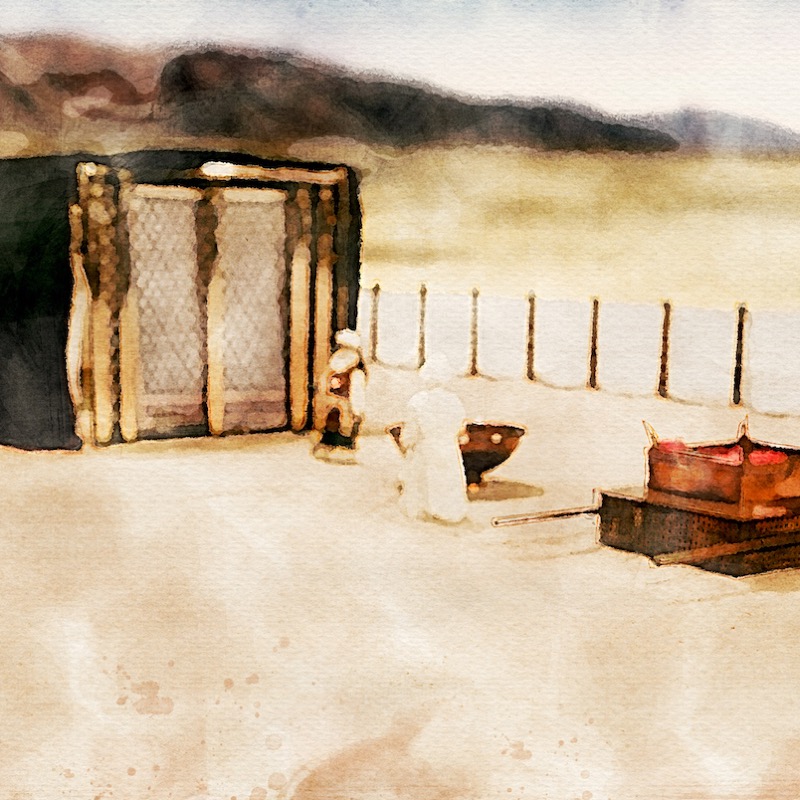
Tonight, ladies and gentlemen, we come, in a sense, to the goal of the journey which we began in our first lecture. On that occasion, in our imaginations, we stood outside the ancient tabernacle of which you see here a model before you. And standing in thought outside the tabernacle at the eastern end, where was the gate, we asked ourselves, what in those far off days was the way in, the road into the presence of God? How under that system could a man or woman find God? So we looked, as we now look again, to the ground plan of the tabernacle, and we saw that there, if you station yourself at the east end by the gate, the road into the presence of God is marked by four major pieces of tabernacle furniture. And we observed that they were not just road markers, each one of them represented something of God's self-revelation to men. They are called in the New Testament copies of things in the heavens. They were simple objects in a way, yet carrying profound parabolic truth, as they brought down the realities of God, the realities of the eternal world, and brought them down to men and women here on earth, that they might face them here and now and learn what God is like and what his standards are and the nature of the welcome he gives to come and meet him. We noticed also that they represented an experience through which people were called upon to pass, if eventually they would come to know God. And hence, as we have been following the road in, in the course of these lectures, and stationing ourselves each night by one of these road markers, we have s- sought to examine our own hearts and experience and ask ourselves, well, if that is what God was saying we need, have we experienced the provision that God has made to prepare us for meeting him. We noticed also that the tabernacle and its services and rituals that God gave for Israel to observe three thousand plus years ago are said in scripture to be not only a, uh, copy of things in f- in the heavens which taught Israel in those far off days. But they were a shadow of good things to come. That tabernacle was part of the unique self-revelation of God that was given to that special nation of Israel. Israel, as you remember, had her beginning with Abraham. And the covenant and promise of God to Abraham was that in him and in his seed, all the nations of the earth should be blessed. And as the centuries went by, God added this and then that detail to his promises. And among those details, this system of worship and approach to God, which was a shadow of the good things to come when the seed of Abraham, the promised Messiah, should come and fulfill all the promises that were made in terms of this ancient tabernacle. So now we come tonight, as I say, we stand there by the gate, and we pass first the altar with its sin offerings and its offerings of gratitude to God. An altar that offered cleansing by blood. We moved on in the next lecture to the second vessel, that is the bronze laver, that offered cleansing by water. Then in our third lecture, we passed through the door of the tabernacle into the Most Holy Place and came to the third major object on the direct road into the presence of God, and that was the altar of incense. And we spent some time also talking about the veil that hung just beyond the altar of incense on its four pillars. The veil, paroketh, eh, which separated the holy place from the most holy. Necessary in those days for the way into the holiest of all, into the presence of God himself, was not then made manifest. Only once in a year was anyone allowed into the most holy place, and he was the high priest and was allowed in on the annual Day of Atonement. Now tonight we are going inside, so to speak, into the Most Holy Place to stand by the symbolic throne of God, with the ark and the propitiatory, with the wings of the cherubim overshadowing it, to meet God who promised there to meet his people and to speak with him. Let's look at a few pictures that will show us, uh, what that ark was like. It was the, uh, throne of God. So here we come in this picture through the door and then into the holy place with the lampstand on the left and the table of showbread or, or presents on the right, and then the little altar of, of incense, the golden altar, and then the veil, the second veil. But tonight we're going beyond that veil into the heart of the holiest of all. Let's look at the pictures of the ark. The ark, as you'll see, was a box made of go- made of acacia wood, overlaid inside and out with pure gold, and a crown around the top of it. On top of that ark was a slab of solid gold, no wood in that, solid gold acting in the first place as a lid, and from the each end of that, uh, slab of gold were figures of two cherubim with their wings overarched towards the presence, towards the, uh, towards the middle, and the, uh, faces of the cherubim down directed towards that slab of pure gold. In earlier English translations, that slab was translated as the mercy seat, following Luther's translation, the Ganada Stura. In, uh, more recent translations, it is more exactly translated the propitiatory, because it was the place where propitiation was made on the Day of Atonement. Let's look at the next picture so that we can see the mercy seat as a separate object from the ark itself. There you see it elevated. And you will see, incidentally, there appear to be contents in the ark. So let's take the next picture to remind ourselves that inside that ark there were certain contents. At least during Israel's journey through the desert, there was inside the two tablets, the two stones with the Ten Commandments written upon them. There was a golden pot full of manna, a memorial of the manna that God gave Israel to eat in the wilderness, and then there was Aaron's rod that miraculously budded on one occasion and so settled a dispute as to who had the right to be high priest. Now that ark is sometimes called the Ark of the Testimony, and sometimes called the Ark of the Covenant. The reason for the two terms is, in the first place, Ark of the Testimony, because, as you see, it contained the two tables of the law, which was God's testimony to Israel of the standards that he required. It means that our study this evening will, in a certain sense, be very grave. Because we now must consider the standards laid down by a thrice holy God. It is inevitable that that will cause us a certain troubling of conscience. And yet, though our study shall necessarily be grave, in the end, as we persist, we shall find it a study full of the most heavenly joy and rejoicing. It is also called the Ark of the Covenant, because upon the basis of that law inscribed on the ten, on the two tables and all its amplifications, God entered into a covenant with his people Israel, that they should be his people and he should be their God. Our first then, our task then is to think about God's law, the Ten Commandments. We know them well, but I'm going to take leave to read them again in your presence. Days were when children were taught them in their day schools. That day, I think, has long since passed. We do need a revival of God's standards of living. So here they come, I read them to you in the words of Exodus, Eleh Shemot, verse, uh, of chapter twenty. and God spake all these words. I am the Lord thy God, which brought thee out of the land of Egypt, out of the house of bondage. Thou shalt have none other gods before me. Words spoken at a time when the surrounding nations had sunken into the crassest of idolatries. And not only into believing in this particular god of the corn and the god of the storm, but into idolatrous interpretations of the universe. The nations had let go the knowledge they once had of the one true Lord God, creator of heaven and earth, and having denied him, had turned to deify the forces of nature. Ancient as those commandments are, therefore, they have their modern relevance, don't they? For where men and women lose vital faith in the one true God, Lord of heaven and earth, they then come to a situation where they can't believe just in nothing. You have to believe something, whether you will or not. And if there's no God creator, then men and women fall to see that they don't run the universe. They didn't cause their own birth. And one day they shall die. And the question insists, what then lies behind our human lives? What controls us? If there's no God, what made us? What will bring us to our end? To make idols, to deify the forces of nature, what else is left? For if there's no God, we are the product of mindless matter. And somehow, mysteriously, our intelligence has come from mindless matter. That is a conundrum that yet hasn't been solved. And what is worse, one of these days, this mindless matter will destroy us. Our intelligence included. This first commandment, thou shalt have no other gods but me, is the anchor line to maintain the dignity and significance and inherent value of human beings. We are not the chance product of mindless matter. We are the cu- the products, the creatures of an almighty, but gracious God, and made in his image. Thou shalt have no other gods but me, therefore. And then in the next place, thou shalt not take the name of the Lord thy God in vain, for the Lord will not hold him guiltless that taketh his name in vain. Remember the Sabbath day to keep it holy. Six days shalt thou labor and do all thy work, but the seventh day is a Sabbath unto the Lord thy God. In it thou shalt not do any work, thou nor thy son, nor thy daughter, thy manservant, nor thy maidservant, nor thy cattle, nor the stranger that was in thy gates. For in six days the Lord made heaven and earth, the sea, and all that in them is, and rested the seventh day. Wherefore the Lord blessed the Sabbath day and hallowed it. Honor thy father and thy mother, that thy days may be long upon the land which the Lord thy God giveth thee. Thou shalt do no murder, thou shalt not commit adultery, thou shalt not steal, thou shalt not bear witness ag- false witness against thy neighbor, thou shalt not covet thy neighbor's goods. That was the summary, the ten words, as they are called, written by the finger of God on those two stones and kept inside the ark, which gave the ark its name, the Ark of the Testimony. Now, the Hebrew word for the law is Torah, and it means instruction. And rightly so, the law of God as given to Israel was wholesome instruction as to how life should be lived. Keep that law, and its practical consequence would be a healthy way of living. Of that there is no doubt. It was therefore instruction. We should gladly receive it as such. But as we read further into the books of Moses, we shall find that God's law was not just instruction. It wasn't just advice. I should try, try living this way for a time and see how it goes. I think you'll find it helpful. It wasn't just like that. It was a sovereign command with a penalty upon disobedience. And anyone who's read the final words of Moses in the book we call Deuteronomy, Haele Debarim, will realize how solemn a thing Moses found God's law, as he foresaw the possibility, the almost certainty, that his loved people would in the end disobey that law, break its covenant, and turn their backs on God. He breathed out the curse of God upon them, in words which, if you read them, make your hair stand up on end. It was not just advice. It was law, command, plus blessing if you kept it, but if you broke it, cursing. And the law standard was this: Cursed is everyone that continueth not in all things that are written in the book of the law to do them. It wasn't a, a, a, a, a, a, a, a mix and pick kind of a thing. You know, so long as you kept this and that commandment, well, it didn't matter if you broke the other. In fact, the New Testament says if you keep the whole law and you offend in one point, you are guilty of all. Like the ancient Greeks would have taught you, virtue is one whole garment. If you make one tear in it, you have spoiled the garment. Now, because that standard was so high, it became evident eventually that while it was good advice as to how to live life practically, as a means of gaining acceptance with God, it was impossible. And they who have tried most to keep it will be the most aware that when they have done their best, they come short. As the New Testament puts it, all have sinned in the past, and all do come short of the glory of God. That's true of me standing here, and I beg leave to say true of you too. However excellent our lives so far have been, we have sinned in the past, and we come short still of the glory of God. So that if entry into God's ex- acceptance and into his heaven depended on our keeping of that law perfectly, then we should have no hope. But when centuries had shown the impossibility of gaining heaven by keeping of that law, then through the prophets and then the apostles, God pointed out what is an exceedingly important thing. The reason, the basic fundamental reason for the giving of the law. Let me read you the words of Saint Paul the Apostle. He says, now we know that what things soever the law says, it speaks to them that are under the law, that every mouth may be stopped, and all the world become guilty, subject to penalty. All the world become guilty under the judgment of God. That was the law. So put, it sounds exceedingly severe. What is God mocking us, first telling us to keep his law, and then telling us we had no hope of achieving it? No, not mocking us. If you will allow me to compare great things with small, God's law has acted like a thermometer, you know. A thermometer that shows us how ill we are. But the thermometer is no cure of the illness, is it now? Suppose one of these days you hear that Gooding is ill, and in the kindness of your heart you come to see me. There I am propped up in bed with my woolly nightcap around my head, and you see me sucking vigorously on this thermometer thing. And you say, hello, gooding, what's wrong with you? I say, I'm ill. Yes, I can see you're ill, but what are you doing sucking that thermometer? Oh, I say, don't be silly. The doctor came here the other day, and he put the thermometer in my mouth and looked at it and said I was running a dangerously high temperature, and if I didn't get that temperature down, uh, that could be fatal. And of course, I'm doing my best to get the temperature down. Of course, that's what I'm doing, sucking this thermometer. My life depends on it. What would you say? I'd say, Gooding, you are ill, more ill than you think you are. The law given to show me how ill I am, but not to grant me the health of salvation and acceptance with God. And if I will listen to God's law and take the temperature it indicates and know I have broken it and stand liable to the judgment of a holy God, then God has marvelous news for me. Let's look again at the picture, shall we? Just to give our operative work to do to earn his keep. And we shall see in that, uh, picture there, the ark and the mercy seat elevated so you can see it. Now let's look what happened to it on the great day of atonement. Well, this picture seeks to show vividly what happened on that one occasion in the year when Israel surrounded God's house on the Day of Atonement, Yom Kippur, and confessed their sins before God. Elaborate ceremonies accompanied that occasion, but center to it all was this, that they chose out two goats, and one of the goats was for the Lord as a sin offering. They confessed their sins over the head of the goat, saying eloquently that they had broken God's law and now were confessing their sins, that they needed a sacrifice to make atonement for their sins before God. So the goat died, its blood was shed, and the high priest, now dressed not in his garments of glory and beauty, but in stark white, took that blood and journeyed through the door, and then through the second veil, and in awe, once a year, into what he believed was the immediate presence of God. He said nothing. There's no record of any great prayer. His mouth was shut, surely. Here he was frankly confessing before God the sins of his people, and bringing the blood of a sacrifice that God had appointed, that God might now forgive those sins and accept the people. So as he came into the most holy place, he dipped his finger in the basin of blood and sprinkled the blood seven times on that mercy seat, on that propitiatory, and before it. And on that basis, God forgave his people and accepted them. That says the New Testament was a picture of what God one day would do in reality, turning the symbol into reality. So let me read you what, uh, that same apostle, the Jew Paul of Tarsus, says to us. The law has us all condemned, for there is no diff- distinction, for all have sinned and fall short of the glory of God. But now here comes God's provision, being justified freely by his grace through the redemption that is in Christ Jesus, whom God has set forth to be a propitiation through faith by his blood, to show his righteousness because of the passing over of the sins done aforetime in the forbearance of God, for the showing, I say, of his righteousness at this present season, that he might himself be just and the justifier of him that hath faith in Jesus. Marvelous words, these, and bear some detailed comment. All have sinned. We come short of the glory of God. But there is a way, says Scripture, by which we can come before God and have God put us in the clear, justify us, to use a technical term, and to grant us forgiveness and peace with God and the certainty of God's acceptance, and receive it not in some hopeful distant future, but in this very present as we live on this planet. How can it be done? Well, says Paul, first of all, God has set forth Jesus Christ to be a propitiation through his blood. Let's pause over that word propitiation and have a little lesson in Hebrew and Greek, at no extra cost. The word that, uh, here is translated mercy seat or propitiatory in Hebrew is kaporeth. And kaporeth comes from the root kapha, and the root kapha seems to have two meanings. The first one is to cover. The second one is to propitiate. So the name of the mercy seat was the Caporet. That's Hebrew. When the ancient Jews who lived in Alexandria came to translate that Hebrew word into Greek, somewhere about two hundred and eighty BC, I can see them now scratching their heads and saying to themselves, how do we get across the meaning of this term in Greek? How can we get across its double meaning? So they translated it by two words, kaporeth as a cover, and so they translated it by the Greek word epithēmā, something that is placed on top. So was that slab of gold, of course. It was placed on top of the ark, and that in itself is deeply significant, because in that ark was the testimony of God, the two tables of stone that cried out without speaking, that the soul that sinneth, it must die. Fancy being an high priest in Israel and asked to come and stand in the presence of God in full view of that holy law of God. The demand of the penalty upon the sinner. With gratitude indeed, I should think the high priest saw that there was a covering on that ark that covered the holy law of God. But then the translators saw that kapores would mean more than covering. It has to do with propitiation. So they added another word in Greek, hilasterion, the covering where propitiation is made for sin. And you see it in function. The lid covering the law, and then as the high priest approaches, representative of the people, the blood of the sin offering that makes propitiation sprinkled on the covering and before it. Saying what? Saying that whereas the people had sinned and deserved the penalty of God's law, no quibbling about that now. Nevertheless, by God's grace and provision, God allowed them, provided them a substitute to take their place and bear the penalty and exhaust it. And here was the token, the blood put upon the mercy seat. There I'll meet with you, says God. There I'll meet with you. And coming to the New Testament, we watch the holy apostle Paul tell us about this reality of which this was a picture. For Paul, Saul of Tarsus was brought up exceedingly religiously and had done his honest best throughout his life to keep God's law more than the average, uh, Jew in his own community. And there were days when he felt he had almost succeeded. But when he met the risen Christ, his own righteousness fell to pieces, and he saw himself for what he was. He had come short. And then it was that he began to see the significance of that lid upon the ark, and how God had at last fulfilled it through the Messiah Jesus Christ of Nazareth, and by his death upon the tree, when he was wounded for our transgressions, bruised for our iniquities, the chastisement of our peace was upon him, and by his stripe we are healed. For all we like sheep had gone astray. We turned every one to his own way. The Lord hath laid on him the iniquity of us all. So Paul saw it. When he saw it, he threw away his own imagined righteousness to put his faith in Jesus Christ. Listen to the term he uses. He says, you know, God has set forth Jesus Christ to be the, mark the The word, word hilasterion. illusterion. The place where we may have propitiation and be reconciled to God and be forgiven. Oh, thank God, my fellow human beings, journeying with me towards God's eternity, as one day we shall stand before God as surely as we have seen this model this morning, this evening, we shall stand before God's throne. Oh, thank God that there is a place where here on earth we can meet with God, long before eternity. For God has set forth Jesus Christ to be that meeting place between heaven and earth, where we may come and open our hearts and confess our sins and find that God has made provision to cover every sin, to grant us forgiveness and declare us to be right with him, so that we may have peace with God. And the terms? Repentance, of course, acknowledgement of our sinfulness and faith in the Lord Jesus. So that, as there Paul puts it, being justified by faith, we have peace with God through our Lord Jesus Christ. That being so, I'd like to remind you of one of the features of the, uh, ceremonies on the great Day of Atonement. On that day, there were three main appearances of the high priest. Of course, there was much toing and froing, but in the end, was it as concerned the major, uh, uh, sacrifice for the nation on the Day of Atonement, the offering of the, of the goat, the priest in his white tunics, not his garments of glory, in his white tunics, he came out of the tabernacle and appeared here in the court, where the people were assembled, and the elders now came near, and they brought the c- the goat, and in the presence of the high priest, their sins were confessed, and the goat was killed and its blood shed and collected in a basin. So appearance number one, the high priest appeared here for the purpose of putting away sin by this atoning sacrifice. Then he took the basin with the blood in it and returned inside through the door, and no longer visible to the people, went into the holy place and threw it into the holiest of all. And sprinkled the blood upon the mercy seat in the very presence of God. So that now, appearance number two, he was appearing in the presence of God on behalf of the people. Let's ponder that a moment. He wasn't there simply for himself. He was the representative of the people. Now on their behalf, as representing them, he came before Almighty Thrice-Holy God as their representative and sprinkled the blood of the sacrifice that God had ordained to cover the people's sin. The question was, would God accept him? If God accepted him, then it meant that God accepted the people, for he was their representative, and all concerned knew it. But if God rejected him, it meant the people were rejected. Because of that solemn issue at stake, the Talmud, the Jewish, uh, expositions of the law and whatnot, relates a, a, a, a, a, a little incident. How historically true it is, who knows? But some of them said that on the Day of Atonement, when the high priest went into the presence of God on behalf of the people, they tied a rope, they tied a rope round his middle and left the end out here. So if just after some long time he didn't appear and they judged that God had rejected him and he had died on the spot, they could haul him out again. You may think that's a little bit, uh, rough, that, but I can sympathize with those folks. If they took it really, seriously, their representative have gone in before God. It would be more than life, really, for them to know whether their representative had been accepted or not accepted. There's no record of their having to use the rope, I may add. And when he had appeared in the presence of God for them, he came out once more and appeared the second time. And when he appeared the second time, he took the second goat. They confessed their sins on it, and it was driven away into oblivion to symbolize the complete removal of the guilt of sin. Now, you know, when I read that, uh, story from the Talmud, it really touches my heart, you'll see. Because if you don't mind my being a little bit personal, for these things do become personal, ladies and gentlemen, don't they? We think tonight not just about ancient history. I think of my own situation. How can I meet God? How can I be sure I am accepted with God? I want to know. And therefore I find with tremendous joy what the New Testament comments on the ceremony of this Day of Atonement. And I'll read you from the Epistle to the Hebrews and from chapter nine. And as I read, you will find the writer here is talking about three appearances. Only this time it's three appearances of our Lord the Messiah, and it says like this, uh, uh, that uh, Christ has been once offered to bear the sin of many, but let me read the whole context. About Christ having come a high priest of the good things to come, uh, through the greater and more perfect tabernacle, not made with hands, that is to say, not of this creation, nor yet through the blood of goats and calves, but through his own blood entered in once for all into the holiest of all, having attained eternity. For Christ entered not into a holy place made with hands, like in pattern to the true, but into heaven itself, now to appear before the face of God for us. Nor yet that he should offer himself often, as the high priest entres into the holy place year by year with the blood not his own, else must he often have suffered since the foundation of the world. But now once in the end of the ages has he been manifested to put away sin by the sacrifice of himself. And inasmuch as it is appointed unto men once to die, and after this cometh judgment, so Christ also, having been once offered to bear the sins of many, shall appear a second time apart from sin to them that wait for him until salvation. I don't know if you've noticed it, but in this passage, three appearances of Jesus Christ our Lord. Appearance number one, in the consummation of the ages, when God's el- purposes were now going to be fulfilled, in the consummation of the ages, he appeared. That is the Son of God, the eternal Son of the eternal God, appeared on our planet. For the Word became flesh and tabernacled among us. He appeared, and he came to Calvary, for this the purpose of his first appearance. There he appeared to put away, in order to put away sin by the sacrifice of himself. That is the central doctrine of salvation, the first appearance of Christ to put away sin by his death on our behalf. What happened next? The third day after he was buried, he rose again on the fortieth day, ascended into heaven. And what now? Now, says scripture, he appears in the presence of God for us. And at that, my ears prick up. Is it really true that Jesus Christ is at this moment appearing in the presence of God for us, for me, for you. Let me ask you, because what I want to know is this. Does God know that Jesus Christ is appearing for me? What would you say about that? You see, that's a crucial thing, isn't it? There's no wonder that God has welcomed the Lord Jesus into his presence. How not? Of course there's no wonder about it. The crucial question is, does God know that when Jesus Christ entered his presence, he was entering as my representative. You say, why are you making it so personal as that? Well, don't you see? Because if God knows that Christ has appeared for my rep- as my representative, then Christ know- then God knowing it has accepted him. Oh, that's marvelous, you'll see. It will never happen that one of these days God will say, half a moment, have I got this right? When you came in here, my dear son, were you coming in here as Gooding's representative? And the Son of God replies, yes, indeed. Well, I didn't realize that. If I realized that, you would have been asked to leave. No, this is the magnificent fact that Christ has entered now to appear in the presence of God for us, and God, knowing it, has welcomed him. He's never been asked to budge, not one centimeter. Do you see what that means? I, the unworthy sinner, am accepted by the living God, both now and for all eternity. And that not because of some special merit, by knowledge of theology or something. It rests solely on this, that the grace of God has provided the sacrifice that has won me acceptance in the presence of God. And this, I suggest, is the question that ought to arise in all our minds as a result of our study this evening. Have I met God in Christ? Have I met God by the throne of God, by that mercy seat which is Jesus Christ our Lord? Have I confessed my sinership and put my sole trust in Jesus Christ, God's son, and in his death for me. If I have, then know this, that he who appeared and came to Calvary to put away sin now appears in the presence of God for you. And God has accepted him, and in accepted him has accepted all who trust him. They who know the Savior will want to shout a subdued hallelujah in their hearts. Peace, perfect peace. In this dark world of sin, the blood of Jesus whispers peace within. There will be a third appearing, of course. For just as the high priest had been in the holiest of all to appear on behalf of the people, then came out and appeared the second time. So will our Lord. He shall appear the second time. Without sin, of course. There's no need to offer another sacrifice like Aaron did. When he comes, no another, not another sacrifice. He shall appear to them that wait for him unto salvation, that is bodily salvation, for when he comes, he shall take all his people home to heaven, to the Father's house, where he has prepared a place for us. Now, when some people hear of that, they feel it's too good to be true. They say, but if you could be absolutely sure of your acceptance with God n- n- here and now on earth and forevermore, does that mean it wouldn't matter if you, however badly you lived hereafter, you'd still be accepted? That's a natural question to raise, isn't it? And the answer is not quite what you might expect. So, to put the answer as shortly as I can, let me remind you that that ark was called not only the Ark of the Testimony, but the Ark of the Covenant. For not only was it the place where the law was located that was God's testimony to his requirements. But on the basis of that law, God called upon the nation to make a covenant with him. You'll read of it in Exodus nineteen where God said, tell the people this, that if they will keep my covenant, they shall be a special nation unto me from among all the nations of the earth, they shall be a holy priesthood unto me. So Moses put the proposition to the Israelites and read them all the words that the Lord required. Then in chapter twenty four of that book of Exodus, you meet the covenant ceremony. Moses didn't merely speak the words, wise man that he was. He had the words written, and he read them out of the book. There should be no disputing of the terms. Oh, I didn't think you said that. They were now written. And he read them in the ears of the people, the demands of God. And the people with one voice full-throatedly replied, all that the Lord has commanded we will do and be obedient. And they said it in their honest fervor and sincerity, perhaps not realizing their inherent weakness. And thereupon Moses offered the covenant sacrifice, took the blood in a basin and sprinkled it on the people and on the book, and said, this is the blood of the covenant which the Lord has made with you, the promise of the people that they would keep his law and thus be his special priesthood. What happened? Why, there were many people in Israel that loved God's law. Read their Psalms. I delight in thy law. Thy word to me is like. Yes, it was a sensible way to live. Who can read God's law but what having to agree? Wouldn't it be marvelous if all the world kept it? Yes. But the biggest of all the saints in Israel simultaneously confessed that they never managed to keep it perfectly. By the time you come to Jeremiah the prophet, Jeremiah is denouncing the nation's sin and perversity, the stiff-neck apostate crowd they were. Jeremiah announces in the name of God that the old covenant hasn't affected what God would like it to affect. And so God says through Jeremiah, let me read you the words. Uh, this is Jeremiah thirty one, you'll see. And it runs like this, behold, the days come, saith the Lord, that I will make a new covenant with the house of Israel and with the house of Judah, not according to the covenant that I made with their fathers in the day that I took them by the hand to lead them out of the land of Egypt, which my covenant they broke, although I was an husband to them, saith the Lord. But this is the covenant that I will make with the house of Israel after those days, saith the Lord. I will put my law into their inward parts, and in their heart will I write it, and I will be their God, and they shall be my people, and they shall teach no more every man his neighbor and every man his brother, saying, know the Lord, for they shall all know me, from the least of them unto the greatest of them, saith the Lord. I will forgive their iniquity, and their sin I will remember no more. Thus proclaimed the great Hebrew prophet Jeremiah in the name of God. The old covenant, unsatisfactory. Nothing wrong with its standard. The weakness was in the people. They didn't keep it. The law was written on stone, but their hearts was a- were another thing. Here is God saying, very good. Then the day will come when I will make a new covenant with them, and it will be different from that first one. How different? Well, instead of just writing the law on two tables of stone, I shall write it, put it in their very hearts. And so the centuries went by, until the Lord Christ came on the night before his crucifixion, meeting with his apostles. And at the Passover meal, he took a cup, he took the bread, and he said to them, this is my body, which is given for you. All of you eat of it. And then he took a cup of wine, and holding it up and passing it to them, he said, this is the new covenant in my blood. All of you are to drink it. Using precise language to show he was now fulfilling that ancient promise of God. Here was the new covenant in his blood, about to be enacted. And when he died, says the Epistle to the Hebrews, this new covenant passed into law. The new covenant has already been enacted, says Hebrews chapter eight, and is in force. The New Covenant, what does it do? Well, this is what is involved in conversion. Do you see? When Paul wrote to his fellow believers at Corinth and called upon them to remember what was involved in their conversion to Christ, he puts it this way. He says, you know, when I came to you, God fulfilled at a practical level the promise of that new covenant. He took me, did Christ, as a writer would take a pen. And as a writer would write on paper with ink, Christ the writer, the apostle was the pen, and the equivalent of the ink was the Holy Spirit. And he wrote on your hearts. There is the difference between the two covenants. The first covenant laws written on, on stone. It's moderately easy to write laws on stone, you know, if you've got a sharp enough chisel and a steady enough hand. You try writing God's laws on people's hearts. That's another thing that will take no less than a miracle of divine grace, that. And that miracle was performed on those Corinthian people when, under Paul's preaching, they received Christ, and Christ fulfilled that covenant by writing his laws on their hearts. What does that mean? Well, the same thing is described by John when he has the words of our Lord, except a man be born of water and of the spirit. The new birth that Israel prophesied by through Ezekiel, the new birth, when God should sprinkle water on them and they be clean. He would take away their heart of stone and put in a heart of flesh. Or Jeremiah, he would write their laws on their hearts. And our blessed Lord announcing this wonder that is conversion. The generation in the human heart of the life of God's spirit, bringing with that life a new nature, a new power to fulfill God's law. That's it. It's that's the reason why the assurance that we are accepted to God, by God, not on the ground of works, but on the ground of faith through Christ. This now is the reason why that doesn't lead to laxity of living. Because to receive Christ is to experience what our Lord described as being born of water and of the Spirit. Does that mean we're not per- we're perfect at once? No, indeed not. So our final lesson tonight is this. A man or woman that has trusted Christ and has experienced this new beginning, this new birth, is being born of water and the spirit, having God's law written in their hearts, will now be expected to begin to work out the implications. And for that purpose, our Lord ordained that from time to time Christian people should meet and celebrate what is called the Lord's Supper. And when they meet to celebrate the Lord's Supper, they have in front of them a loaf of bread and a cup of wine. And they break the bread in memory that Christ gave his body and bore our sins in his body on the tree. Then they drink the cup, and the words are of our Lord, this is the new covenant in my blood. Our sovereign Lord calls us to do it, you know. He doesn't leave it optional. Why does he call us with such regularity to witness this covenant? Well, you see what the first terms of the covenant are. I will write my laws on your hearts. And when, as a Christian, I take that cup from the hand of the risen Lord, my response ought to be, yes, Lord, write your laws on my heart, write them ever more deeply. And forgive me for those times when I have gone against them. And if we do, then all shall be well. If as a believer I were to get careless and live carelessly and not confess it to Christ, then what would he do then? Well, says the Bible, he will discipline me to bring me to my sense. That's what he'll do. If need be, he will judge me in the sense of disciplining me so that I shall not ever be condemned with the world. But he leaves it to our option. We are to examine ourselves. Where we find irregularities in our conduct, to confess it to him. And as we take that cup and hear his words again, this is the cup of the new covenant in my blood, which was shed for you. I'll write my laws on your hearts. And then we hear him say again those wonderful words, and their sins and iniquities I will remember no more. Isn't that marvelous and magnificent? God's way of salvation. So that now, as we have thought about it, and of the place and the person where we may meet God and be prepared here on earth for meeting him in heaven. Shall we not, each one of us now, make our response to God in response to his word? Shall we pray? Our Father, we do bless thee that there is a place here on earth where we pilgrims through life may come and meet thee. And in spite of our errors and our fallings and failings, know thy pardon, know acceptance with thee, and peace with thee, through Jesus Christ our Lord. Thou hast set him forth before us as the great mercy seat. Now, as we lift our hearts to thee, guide us, we pray, to that mercy seat, that each in his and her own heart may do business with thee, nor rest until each one of us has heard thy voice speaking to our hearts, the words of assurance. Their sins and iniquities will I remember no more, and I will write my laws on their hearts. To this end, we pray thy blessing on our study, through Jesus Christ our Lord. Amen.