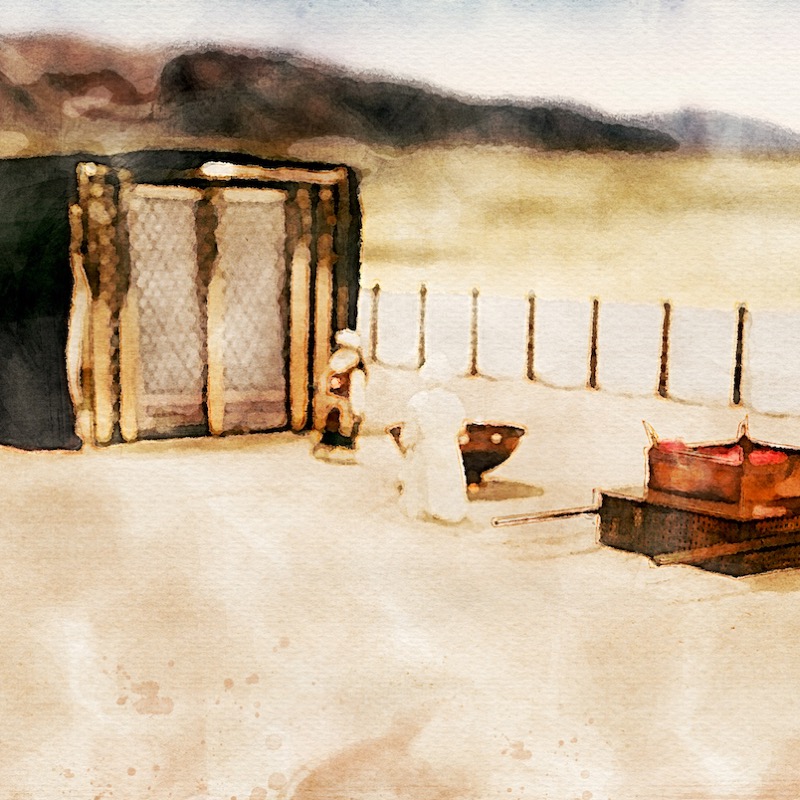
Gooding, David: 8 - The Court Screen and Pillars
ID mfh_1087316743Date unavailableBefore 2.95Restored 4.58
Thank you, Mr. Chairman, sir, for those generous remarks of thanks. Let me to say, because this is the last occasion that I shall have the happiness of being with you for a time, how much I myself have enjoyed, uh, this week passed with you. I, uh, am aware, of course, it's much easier to stand here and speak than it is to sit on the seats and listen. And I'm sure you find the seats growing progressively harder every night for those extraordinarily long lectures. The fact that you have endured it and survived ought to be recorded in some book of records, you'll see. Thank you for making it so easy to give the lectures, and you have managed to look so agreeably interested that it has made my work easy. If you have found the, uh, length of the lectures a bit of a trial, and you have complained to the elders of this church, I have to tell you in self-defense that they didn't convey your criticisms to me, so that it is not altogether my fault that I have gone on in my habit, you'll see. Anyway, God bless you abundantly for, uh, your interest in his word. Our Lord has himself told us that if we sow to the spirit, we shall of the spirit reap eternal life. Now, as we come to the last lecture in this series, I ask you to notice that this ancient tabernacle built by Moses at God's command had around it a wall. The wall was somewhat about seven foot six high. In that, uh, feature that the tabernacle, the dwelling place of God, was surrounded by a wall. This first of the dwelling places of God that we read of in Old Testament was the same as all the others we read of. All of them were surrounded by a wall. Moreover, and of special importance to us this evening, is that the final and eternal tabernacle of God, likewise, shall have a wall. When John the Apostle stands in his vision on the threshold of eternity, as the heaven and earth have passed away, and what God has been able to salvage by his great redemption from earth's history is now revealed, and the heavens are opened, the new heavens and the new earth, and there comes down from heaven, according to his vision, the holy city, the new Jerusalem, prepared as a bride adorned for her husband. Then a voice is heard saying, the tabernacle of God is with men, and he shall dwell with them. That is a striking reminder of the importance of this prototype that God had Moses build. What this stands for, and its significance and function, will be one of the major things that God has achieved for all eternity. So while Jod- John stood there in wonderment at what he saw, there came an angel to him and said, come, I will show you the great city, the new Jerusalem, the bride of the Lamb, the tabernacle of God. And he took me away and showed me. And what John saw was not only the city, but he saw that round it, round that great tabernacle, there was a wall, great and high, and on the foundation of it the names of the apostles of the Lamb, and on the twelve gates thereof the names of the tribe of Israel. The wall stands for what? In the ancient tabernacle, it served the purpose of protecting the sanctity of the dwelling place of God, and made a clear distinction between what was outside and what was inside. Inside here was sacred. Outside here was common, ordinary. That is not to say, then or now, that the ordinary things of life are of no value. God made this world, and the ordinary things of life, be they healthy and good, are God's great gifts to us. But God makes the point in this far off day by this wall, that whereas the ordinary things of life are good, yet there are higher values than ordinary things. Inside was not ordinary. This was sacred. We'll say, what is the difference between ordinary and sacred? Well, you know, I go and stay in many a home in the course of my work, and very often my hostess will say, before I retire to bed at night, now if you feel thirsty at night, uh, you're free to come down and help yourself. There's the fridge, there's the milk, there's the fruit juice, there's the teapot, and take any cups you like and, uh, make yourself tea or whatever you like in the middle of the night, you'll see. I very rarely do that, but, um, suppose I came down. There's one thing I've learned. When she says take any cup you like, she doesn't mean that. Because, you'll see, there are cups and cups. Some are ordinary cups. They inhabit the kitchen. Some are special cups. They could inhabit the lounge in a china cabinet. Oh, beautiful cups. I know enough not to attempt to use them in the middle of the night for my cup of tea. Woe betide me if I broke one of them. They are of such special value, so they're in their special container. So the things represented by this tabernacle. These are divine things. These are of inexpressible value. They were not to be deflated or, to use the technical term, profaned. Our Lord Jesus, when he gave a pattern principle of prayer, told us to pray like this: Our Father who art in heaven, hallowed be thy name in this temporary world, where the value of things gets profaned often enough, we need, as we n- need nothing else, maintain in our hearts a sense of the absolute holiness and sacredness of the name of God. It is a sorry thing to see where our modern civilization in the West has, uh, descended to. To listen to some of the so-called comedy shows on BBC would make the hair stand up on end, would it not? How the Savior's name, the very idea of heaven, and talk of hell are made the butt of comedy in what amounts to very little less than utter blasphemy. Made a joke of. There's nothing wrong with humor, but to make a joke of things that are sacred is perilous indeed. This wall of pure linen around the tabernacle was there, first of all, to make the distinction between what is sacred and what was ordinary. It was there likewise to make a d- uh, distinction between what was clean and what was unclean? So it is written of the final eternal tabernacle. Blessed are they that have washed their robes and made them white, that they may enter into the gate in the city and have access to the tree of life. Why blessed? Blessed for all the glories and the grace and the wonders that God will give them to enjoy in his eternal heaven. But blessed for this reason too, blessed are they that wash their robes that they may have the right to come to the tree of life and may enter into the gates of the city. For without, outside, are dogs and sorcerers and fornicators and murderers and idolaters and everyone that loveth and maketh a lie outside the city, ladies and gentlemen, in the home of the lost, society will be disgusting, horrible, unclean. So with those solemn words in our hearts and ears, we come to think about this wall and what else it might tell us about. Because this was a portable shrine, the wall was made of linen curtains, about seven foot six high. It was held up by this series of pillars that you can see there in the screen there from a bird's eye view, and here in the model. That was their task, to hold up the screen. Of course, there was a gate. But while God would maintain the holiness and sacredness of his house, he had a gate put at the eastern end, large and colorful, that everybody might see at once where the entrance was. And we have thought in the week of the various provision he had made, even for fallen and sinful men and women, to come and find forgiveness and find the road into the very heart of God. So there was a gate there, as there is a gate still into salvation. But you see, there would be no point in having a gate if there wasn't first a wall, would there? If there were no wall, there'd be no point in having a gate. And therefore, we concentrate first on this gate. And we think tonight about those pillars. Now, they were made of wood, and I'm not about to suggest that you are too, but then there is a sense, isn't there, that those pillars, by a simple analogy, could represent all those people who know the Lord and are members of the house of the living God. For like those pillars had the responsibility of keeping up that wall and the standards it spoke of, so have believers in Christ, surely, the responsibility to stand one with another in this ungodly world, and to raise up God's holy standards, both by our lives and the way we live, and by the message that we proclaim to the world. Yes, we also have the privilege of holding up before our men and women the glorious gate into salvation. In the person of our Lord Jesus, who said, I am the door, by me if any man enter in, he shall be saved. But ladies and gentlemen, there's no point in holding up a door to salvation if first we let the standards down. Alas for the temptation that has come upon so many professing Christian churches, where to gain the sympathy of the world, they have let down the standards of God's holy law so abysmally that there's no point in asking people and warning people that they must come and enter the gate to be saved. For the churches have often approved the same unclean behavior that the world has chosen to follow. So then our, our position as believers is to hold up God's holy standards in the world. The world may see the distinction between the common and the sacred, between the clean and the unclean. But you know, it must have been quite a thing for those pillars, when you've got a dust storm or a whirlwind in the desert, to stand there with these large sheets of linen. You can imagine when the wind blew either side, how they would have to take up the strain, wouldn't they? And so it is with us too. If we're going to take our stand in the world, intellectually in our schools and universities, and stand for God the Creator, and if we're going to stand in the world for God's standard, sooner or later we shall feel the strength of the opposition. How shall we be able to stand? I remember hearing of a young gentleman who one night came to Christ for salvation. And the next day he went off to work, and his friends were anxious to know how he got on. Uh, they said to him the next day, how did you get on? We said, very well. No trouble at all? No, he said, I didn't tell anybody. Mm. When we ta- once we take our stand, either amongst our friends or publicly, we shall find the winds of opposition. What provision is there so that we can stand? And having done all to stand. I'm going to use these pillars and their provision by simple analogy. I'm not saying they're types or anything like that, but by simple analogy that we might learn a lesson or two from them. Let's see the next, uh, picture. Each of those pillars was provided with a heavy socket of solid bronze under them. So the pillar stood in the bronze socket, and this being weighty, it pulled down the center of gravity considerably, you see, and gave them a firm rootage. And if we are going to stand for God, then we must ask that God do for us what he promises to do in the New Testament. Listen to Paul writing to some of the believers at, uh, Colossae. And he says thus, which you'll see, that, uh, you being in time past alienated in enemies in your minds by your evil works, yet now hath he reconciled in the body of his flesh through death, to present you holy and without blemish and unreprovable before him, if so be that you continue in the faith, grounded and rooted, and be not moved away from the hope of the gospel, which you heard and which was preached in all creation unto him, wherever I, whereof I, Paul, was made a minister. Did you pick up the terms? That you be grounded and steadfast, and not moved away from the hope of the gospel. Sometimes I think we do not emphasize quite enough what the older believers used to emphasize, and certainly our Lord emphasized it. The need that we be rooted and grounded. You will remember the parable of the sower. When our Lord came to explain the significance of the seed that fell upon the rock and immediately sprang up because it, uh, was had shallow ground. And then, when the sun got out and the rain, it withered away. When he came to explain it, he said, you'll see, these bring forth no fruit because they have no root. Root. This is important, my brothers, my sisters, that we be rooted and grounded so that we can stand the trials and temptations of life. Rooted and grounded in what? Well, first of all, here Paul talks about being rooted and grounded in the faith, in the doctrines of scripture, so that we be not moved away from the hope of the gospel. And this is exceedingly important. For my little slice of life that I have seen, oh, how important it is that we all, and our young people in particular, be rooted and grounded in the faith, not merely in experience or emotion, good as those things may be, but that they know their Christian doctrine, the faith, and know it rigorously, and are rooted and grounded in the faith. To send young people out into this world these days who are not rooted and grounded in the faith, to meet the blasts of intellectual atheism and agnosticism and worldliness. It's like sending children to, uh, uh, out in front to meet men with muskets. Rooted and grounded in the faith, all my dear fellow elders. See to it that the believers are rooted and grounded in the faith, so that they be not moved away from the hope of the gospel. And then in Ephesians chapter three, Paul confesses that he prays regularly for the pe- for his fellow believers, that, uh, God would grant you according to the riches of his glory, that you may be strengthened with power through his spirit in the inner man, that Christ may dwell in your hearts through faith, to the end that you, being rooted and grounded in love, might be strong to comprehend, to apprehend with all the saints what is the breadth and length and height and depth, and to know the love of Christ which passeth knowledge, that you may be filled unto all the fullness of God. Rooted and grounded now, not here so much in the doctrines of the faith, but in the love of God. My dear fellow believers, sooner or later we shall all feel the blast and the storm and the tempest. And what Satan will do if he can is to sow in our hearts the thought that somehow this isn't fair. And why has God allowed this to happen to me? And how can you say that God really loves me if he's let this kind of thing happen? And if that happens like that, then we shall find our knees wobbling and come near despair. We need, therefore, to be rooted and grounded in love, don't we? And the man who wrote it had had his share of tribulation. I think of him, uh, as he says, I was a night and a day in the deep, clinging to a bit of wood in the middle of the Mediterranean Sea. What do you think would have happened if I came over in my helicopter and looked down to Paul, with the water now lipping round his lips, to see, and there he is a night and a day in the deep. I said, hello, Paul, is that you? Yes. Hm. You know, Paul, I want to say I don't think God is fair. Look how well you've served him. And after all you've done to serve him, that he lets you wallow in the deep like this for a night and a day. What do you think Paul would reply to me? I think as the water got into his mouth, he'd say, don't you blaspheme like that. I am persuaded that neither life nor death, nor principality, nor power, nor might or dominion, or any such thing, shall be able to separate us from the love of God that is in Christ Jesus our Lord. He didn't say that the love of God will keep us from tribulation. He said the love of God will keep us through the tribulation. A man rooted and grounded in the love of God. Provision number 1. That we might be rooted and grounded in the faith and in the love of God. And then each of those pillars, as you see, had, uh, uh, the ropes, the guy ropes coming down here to a stake or a tent peg in the ground. So if it had a weight at the bottom to keep it solid on the earth, then you had the rope from the top down to your guy rope, you see, down to your stakes in the ground that kept the top from shaking too much. Very nice, wasn't it? Now, I suppose tent pegs are not common things nowadays, except with Boy Scouts, do you see? For we have more comfortable ways of going on holiday than necessarily sleeping in tents, do you see? But for people in the wilderness who were living in tents, as the Bedouin do to this very day, the tent peg is a very important part of the household's, uh, setup, because it represents security for the tent. That's why the women were generally in charge of the tent pegs. And that's why when old Sisera came a-running to Jael's tent, she had a tent pig happy for him to put at the appropriate moment through his skull. That's another story. She was obviously used to wielding the hammer because she was responsible to keeping the tent up, as mothers are very often for keeping the home up and the family up, aren't they? So tent pegs were an important part of their life, and they, uh, gave themselves, therefore, to the metaphors of the language. When Jerusalem is, uh, told of the blessings of God that will come upon her, Zion, the city, now personalized as a woman, and she's going to have increase of citizens and welfare, she is told in the poetry of Isaiah to lengthen your, or your ropes and fasten in your stakes, do see. She's going to get a great increase of blessing and security. So the tent peg, the nail fastened in a sure place so it doesn't come out when the wind blows the old tent and pulls against the stake in the ground. The stake stands firm. And what shall I say in my little analogy corresponds to that? I leave it to you to make your own choice. But, uh, my choice is that when things get rough, how marvelous are the promises of God. For says Paul to the Corinthians, two Corinthians chapter one, the God whom I serve and his son Jesus Christ are not yes and no people, yes one minute and no the next. For howsoever many be the promises of God, in him that is in Christ is the yes, and his in in him is the amen to the glory of. I think that is superbly wonderful. And if I may, therefore, get boldness from it to imagine the scene, all the promises of God and God's purpose, that the Son of God should come to save us, and Christ the Son saying to the Father, yes, yes. Coming and finishing the work and saying the amen. And God proposing to save that non-entity that is gooding, and Christ says, yes. Ah, but save him to the uttermost. Yes, says Christ. And lose none of my people. Yes, says Christ, that I, yes, that's right. One day shall he pronounce the amen as he brings all the people of God home to glory. Oh, what a lovely thing it is to know the great promises of God, like Abraham of old, that we can take hold of them when the winds blow and the storms rage. Round the neck of these pillars, somewhere where the pillar and the capital met, there was what is called in the old translation a fillet made of silver. It was, as far as one can make out, for decorative persons. That is why some gentlemen still wear a, a, a tie and have a collar and a tie on their shirts. You know, where the old head meets the neck. Mm-hmm. To make it look sort of presentable, they wear a collar, don't they, and a tie. But that, by the way, you'll see. You'll notice in many a pillar of a Greek style, there'll be an ornamentation just at that point, you'll see. It's made of silver, redemption money, indeed. It was for the adorning of the pillar as their heads appeared above the screen, made it look nice. And you mustn't be surprised if I tell you, my brother, my sister, you're supposed to look nice. Well, you do already, but now you know what I mean. In the spiritual sense, you are meant to be an attractive adornment of the gospel. Let them learn good works, says Paul, that they may adorn the doctrine of our great God and Savior, Jesus Christ. We have to preach, of course, the holiness of God, uncompromised. Then, there are ways of doing it, aren't there? And we must, by our lives and by our speech, try to adorn the doctrine and make it appear in people's hearts, not as some cranky little nonsense, but as the attractive gospel of our Lord Jesus that it is. And finally, the capitals on the top were overlaid, uh, with silver. At the bottom, the sockets were bronze. At the top, the, uh, capitals were overlaid with silver. And that too, that silver was, uh, uh, sourced in the redemption money that the Israelites gave as a ransom for their souls when they were numbered in the annual, or however often, in the national census, that there be no plague upon them. Silver therefore becomes the token price of redemption. Hence the remark of Peter in his first epistle in chapter one: we are redeemed, says he, not with corruptible things like silver and gold, but with the precious blood of Christ. Silver, then, shall point us to the redeeming work of Christ. But notice this time it's on the ca- capital. The Hebrew word means simply the head of the pillar. Redemption money, redemption silver on the head, do you see? And I like what Paul says, therefore, at the end of Ephesians, when he is discussing the armory that God has given us so that we might fight the good fight of the faith. It's not only the breastplate and the military shoes and the sword of the Spirit, which is the word of God. But he says, take to you the helmet, the hope of salvation. You say, I'm already saved. Well, thank the Lord for that. But then there's a part of our salvation that's not yet complete, is there not? We have forgiveness, we're justified, we're born again by God's grace. But now is our salvation nearer, says Paul, than when we believed. For here he talks of the redemption of our very bodies. In these we groan, just as nature groans, waiting our adoption, the redemption of our bodies. Ah, what a lovely thing. If you're going to think about the future, my dear brother and sister, about prophecy and all the things that are to come upon the world, just take the precaution, won't you? Just as you're about to begin, look around and get hold of your helmet and put it on your head, just to protect your thinking, do you see? Else you could go astray. What protects our thinking about the future? The helmet of salvation, the hope of salvation, salvation that at the the Lord. Lord.